Rss

  • youtube

The American Church – 10 – The unrecognized enemy

America the exceptional

John Quincy Adams expressed the sentiments of many of the Founders when he wrote of the importance of the Bible and Christianity in the nation’s founding.

The highest glory of the American Revolution was this; it connected in one indissoluble bond the principles of civil government with the principles of Christianity…From the day of the Declaration…they (the American people), were bound by the laws of God, which they all, and by the laws of their Gospel, which they nearly all, acknowledge as the rules of conduct.[1]

The remarkable strength and vitality of the American church from its very beginning with the Pilgrims in 1620 until the mid-nineteenth century can be attributed to the American church’s success in countering Satan’s twofold attack as previously described. The European reformers had begun the reformation process. The American church’s continued devotion to the Bible as the final authority of truth greatly influenced the formation of the political structure of the United States. As a result, America became most successful nation in the history of the world, and soon after its founding, many nations recognized the exceptional nature of the American Republic.

A Frenchman named Alexis de Tocqueville traveled to the United States in 1831 to find out the reasons for America’s success. For nine months he traveled throughout the nation to observe all facets of life in America and wrote of his findings in Democracy in America.

On my arrival in the United States, it was the religious atmosphere which first struck me. As I extended my stay, I could observe the political consequences which flowed from this novel situation. In France I had seen the spirit of religion moving in the opposite direction to that of the spirit of freedom. In America I found them intimately linked together in joint reign over the same land.

…America is still the country in the world where the Christian religion has retained the greatest real power over people’s souls and nothing shows better how useful and natural religion is to man, since the country where it exerts the greatest sway is also the most enlightened and free.[2]

Tocqueville’s first-hand account provided ample evidence that America’s exceptionalism was the result of the centrality of religion and especially Christianity in American life during the nation’s founding and first fifty years of its history.

How does one judge whether or not a nation is exceptional? Generally, a nation may be judged as exceptional when it is stable, prosperous, and free. Those marks of an exceptional nation are produced when a specific set of ideas and philosophies produce institutions and policies that are conducive to those qualities of stability, prosperity, and freedom. The critical element standing between a nation’s institutions and policies and the qualities a nation exhibits are the ideas and philosophies upon which the nation is guided. The ideas and philosophies that guided America were based on the Bible and Christianity and produced a nation that was the envy of the world.

Before we proceed, it is necessary to repeat an earlier caution. Although the scriptures are the wellspring of all truth, the church must not discard the wisdom and experience of generations of our Christian forefathers nor reject the church’s rich history and knowledge gained over the centuries which are invaluable to a right understanding of scriptures. The successes and failures of the church through the centuries serve to illuminate, explain, and confirm the Bible’s teachings.

As has been shown in previous chapters, Satan’s primary attack on the church centers on undermining the truth and authority of God’s Word and occurs both within and without the church.

The church is attacked from within – doctrinal errors and heresies

The church’s first challenge came almost immediately following its birth and came through challenges to the truth of biblical doctrines (dogma, creed, beliefs, principles, teachings).
Over the entire course of church history, various doctrinal errors and heresies sought to discredit, corrupt, or deny the inerrant Word of God. Over the centuries the church eventually elevated man’s reason to be equal or superior to the authority of the Bible in many areas which led to sin and corruption. The Reformation promised sola scriptura—the Bible alone. But the doctrinal embellishments and practices of the pre-Reformation church clung tenaciously to the reformed churches in Europe. The American colonists were eager to cast off these man-made hindrances and looked to the scriptures alone as to their authority in building “a pure and stainless church” undefiled and unencumbered by centuries of man’s wisdom and corruptions of doctrinal purity. As a result, church authority built on man’s reasoning and opinions no longer dictated church practices and defined doctrine apart from the scriptures.

The church is corrupted from without – mixing of church and state

Beginning in the fourth century, the church abandoned its proper scriptural role in society and relationship with governments and rulers which allowed the church to wield the sword of the state and the state to meddle in church affairs. This mixing of church and state lasted for more than a thousand years and was not entirely cast off by the Protestant reformers.

The most distinguishing feature of the Reformation Lutheran church was the power given to the state. Luther supported the principle that the state should be above the church. However, Calvinists took the opposite view and denied that the state had any power over the church. Calvin believed the church had power over the state. Both responses were nonbiblical as to God’s design of the roles of church and state in society and the relationship between them. The church must let the state bear the sword of state but at the same time admonish the state when it overreaches its proper biblical position and role in society.[3]

Because the first settlements of New England were small, isolated, and highly motivated by their desire for religious freedom, of necessity they tended toward governance through theocracy. At the beginning of the 1700s, those colonies founded upon religious purposes continued as theocracies but in a less stringent manner. The Great Awakening and the subsequent multiplication of new sects and denominations continued to lessen the influence of church-dominated civil governments which had substantially disappeared by end of the Revolutionary War or soon thereafter. With the ratification of the Constitution, a new relationship between church and state was established and was closer to the biblical model than had ever occurred in the history of the church.

The church is corrupted from without – the humanistic spirit of the world

The church had also been attacked from without as it absorbed many of the tenets of humanism. But, the colonists’ adherence to scripture alone as their source of authority stood as a bulwark against humanistic doctrines and influences. In spite of the American church’s resistance for over two hundred years, humanism became its greatest challenge during the latter half of nineteenth century and continues as such to the present.

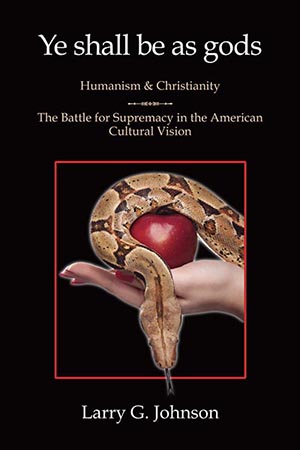
To understand the devastating effects of humanism on Christianity and the nation, a brief examination of humanism’s meaning, origins, and history is necessary. This examination is important as it will give a better understanding of the forces of humanism at work in the modern church as well which will be discussed in later chapters. Because humanism has been such a central force in causing the decline of the church, some comments from prior articles bear repeating.

The humanistic spirit is of Satanic origin and has been present within human society since Adam and Eve were driven from the Garden. It is the spirit of rebellion of man against God. The ancient Greeks made it a philosophy, and eventually humanism banished God altogether and placed man at the center of all things.

The Renaissance (generally dated as being the 1300s through the 1500s) was considered a rebirth or revival of learning and a time of transition between the Middle Ages and modern times. Beginning in Italy, it marked the humanistic revival of the classical influence of Greece and Rome that led to the flowering of the arts, literature, and modern science.[4] The Renaissance and post-Renaissance cultures were profoundly affected by the writings of the Greek and Roman philosophers and thinkers who lived many centuries earlier. But along with the advancement of mankind, the humanistic emphasis fundamentally changed the way man thought of himself. He had become the center and focus of life in contrast to the biblical revelation of man’s position and relationship with God.[5]

Elements of this redefinition of man invaded the church as early as the thirteenth century through the thoughts and writings of Thomas Aquinas (1225-1274), an outstanding Catholic theologian whose influence still dominates many within the Catholic Church.
Aquinas believed that man revolted against God and was fallen but not completely. He believed the will was fallen but the intellect was not. Therefore, in addition to the Bible, men could rely on human wisdom as well as the teachings of non-Christian philosophers. As a result philosophy was separated from the Bible and freed man to act autonomously.[6]

Aquinas revered the ancient Greek philosopher Aristotle (384-322 B.C.). Through Aquinas’ efforts, elements of Aristotle’s non-Christian philosophy began to be accepted by the church as a source of authority alongside the Bible. In searching for answers to the questions about life, Aristotle emphasized the meaning of individual things (the particulars) as opposed to biblical absolutes and ideals. Because Aquinas’s unfallen human reason was now autonomous and equal to revelation, many of the pronouncements of the church were based on pagan Greek and Roman philosophies, and eventually these became more important than many teachings of the Bible. But man’s fall was complete including his reason. Therefore, if one begins with man’s intellect to determine truth about the particulars (things, actions, e.g., a person’s individual acts) instead of the absolutes found in the Bible, there are no fixed standards for determining values, morals, and laws. In other words, there is no basis for distinguishing between right and wrong.[7]

Humanism’s entry into the church in the thirteenth century led to an increasing distortion of biblical teaching. When the authority of the church became superior to the teaching of the Bible, fallen man was told he was able through his own reasoning to return to right relationship with God by “meriting the merit of Christ.”[8] In time this focus on understanding the meaning of the particulars without benefit of God’s revelation dominated all spheres of life.[9]

Renaissance humanism continued to strengthen and cries for a complete separation of man’s reason from God’s revelation prepared the way for the rise of modern humanism during the Enlightenment in which man declared himself to be a totally independent being and denied God’s existence.[10] France was humanism’s epicenter, but all of Western Europe was affected. The era of Enlightenment is generally considered to have lasted from the late 1600s through all of the 1700s. Although a relatively short period, the Enlightenment has had monumental destructive consequences for the church that continue to the present day. The Enlightenment produced a strong intellectual confidence in the power of human reason which was reflected in its doctrines of progress, rationality, secularism, and political reform.[11]

This witch’s brew distilled from the swirl of the intellectual ferment and political turmoil of the Enlightenment era produced the philosophy of modern humanism in which all authority must be continually questioned, moral values do not arise from fixed ideas of right and wrong, and man is declared not fallen but perfectible and continually progresses through the accumulation of knowledge from scientific advances and human reason.

In 1949, Dr. Corliss Lamont wrote The Philosophy of Humanism in which he defined the humanistic philosophy by listing a number of propositions that gave humanism’s explanation of the universe, man’s nature, and treatment of human problems. The following are some of Dr. Lamont’s key tenets: All forms of the supernatural do not exist. Nature is the totality of being. Man is the evolutionary product of Nature. There is no conscious survival after death. Through reason and the scientific method, man can solve his own problems. Human values are derived from man’s earthy experiences and relationships and therefore are not absolute or universal. Happiness, freedom, and progress in this world are the highest goals of all mankind.[12]

It was the humanism of the French philosophers’ that built the framework for the disaster known as the French Revolution. Shouts of “Liberty! Equality! Fraternity!” became the reality of “monarchy, anarchy, dictatorship” all within the space of a little over a decade. However, it was the ideas and philosophies derived from the Bible and Christianity that guided the American Founders, led to the Constitution, and produced the greatest nation in the history of the world. Historian Paul Johnson wrote of the core difference between the two revolutions.

The essential difference between the two revolutions is that the American Revolution, in its origins, was a religious event, whereas the French Revolution was an anti-religious event. That fact was to shape the American Revolution from start to finish and determine the nature of the independent state it brought into being.[13]

Consequences for the nation if the pillars of Christianity are overthrown

John Jay co-authored the Federalist Papers and was the first Chief-Justice of the U.S. Supreme Court. He described the consequences to America should it ever allow the overthrow of the pillars of Christianity upon which the nation was founded.

To the kindly influence of Christianity we owe that degree of civil freedom, and political and social happiness, which mankind now enjoys…Whenever the pillars of Christianity shall be overthrown, our present republican forms of government—and all blessings which flow from them—must fall with them.[14]

Over two hundred years later Jay’s caution appears to have been prophetic for the forces of humanism and secularism have chipped away at the pillars of Christianity for the last 150 years to such an extent that our civil freedoms and republican forms of government are near collapse in twenty-first century America.

Larry G. Johnson

Sources:

[1] Tocqueville, Alexis de, Democracy in America, Gerald E. Bevan, Trans., (London, England: Penguin Books, 2003), pp. 340, 343, 345.
[2] William J. Federer, America’s God and Country, (Coppell, Texas: Fame Publishing, Inc., 1996), p. 18.
[3] B. K. Kuiper, The Church in History, (Grand Rapids, Michigan: Wm. B. Eerdmans Publishing Co., 1951, 1964), p. 184, 200.
[4] “renaissance,” Webster’s Seventh New Collegiate Dictionary, (Springfield, Massachusetts: G. & C. Merriam Company, Publishers, 1963), p. 725.
[5] Francis A. Schaffer, How Should We Then Live? (Wheaton, Illinois: Crossway, 1976), pp. 40, 51.
[6] Ibid., pp. 51-52.
[7] Ibid., pp. 52, 55.
[8] Ibid., p. 56.
[9] Ibid., pp. 60, 71.
[10]] Nancy Pearcey, Total Truth, (Wheaton, Illinois: Crossway, 2004, 2005), p. 101.
[11] Russell Kirk, The Roots of American Order, (Washington, D. C.: Regnery-Gateway, 1991), pp. 348-349.
[12] Corliss Lamont, The Philosophy of Humanism, Eighth Edition, (Amherst, New York: Humanist Press, 1997), pp. 13-14.
[13] Paul Johnson, A History of the American People, (New York: HarperCollins Publishers, 1997), pp. 116-117.

The American Church – 9 – Growth and characteristics of the evangelical church

To understand the dominant Protestant paradigm and its characteristics that existed in 1870, we must understand the main currents of Christianity in America that began with the Pilgrims and developed through the three Great Awakenings. The first current began with the early Reformation churches planted in America in the early seventeenth century. These were the Congregationalists, Presbyterians, and Episcopalians (Anglican), but their religious fervor and commitment cooled as native-born second and third generation colonists replaced their European-born parents during the last half of the 1600s. The second current grew from the stirrings of revival that blossomed within the church during the 1720s. These stirrings became a renewal movement called evangelicalism and birthed the First Great Awakening that began in the 1730s. Evangelical churches emphasized a revivalist style of preaching, personal conversion, personal devotion and holiness, and individual access to God which deemphasized the importance and authority of the church.[1] Separate from these two currents was another group known as confessional churches which did not participate in the revivalist movements but emphasized their official and churchly characteristics. Confessional churches included Catholics, Lutherans, German Reformed, Dutch Reformed, and Old Side Presbyterians.[2]

The evangelical movement developed two branches of its own. The populist churches were strongly revivalist, appealed to the common people, did not emphasize doctrine, and were strongest in Southern states. These churches were mostly Baptist, Methodist, Church of Christ, Disciples of Christ, and “Christian” churches. Although evangelical, the second group was more rationalist and scholarly. These churches were found mostly in the north and included the evangelical segments of Congregational, New Side Presbyterian, and Episcopal churches and are generally viewed as having a traditional emphasis on theology and scholarship.[3]

The populist wing of evangelicalism became the dominant branch of Christianity in America by the end of the American Revolution and establishment of the American republic. In 1760, the Anglican, Congregational, and Presbyterian churches accounted for more than forty percent of all American congregations but declined to less than twenty-five percent by 1790. However, the number of populist churches grew dramatically. The Baptists grew from forty-nine churches in 1760 to 858 by 1790. The Methodists went from having no churches to over 700 congregations during the same thirty year period. Gordon Wood wrote of this period, “The revolution released more religious energy and fragmented Christendom to a greater degree than had been seen since the upheavals of seventeenth century England or perhaps since the Reformation.” Others called the period a “…Revolutionary Revival.”[4]

Nancy Pearcey lists four major themes in the development of the American evangelical church which continue to shape its characteristics, patterns, and contours to the present day.

…the focus on an intense emotional conversion experience; the celebrity model of leadership; a deep suspicion of theological learning, especially as embodied in creeds and confession; and an increasingly individualistic view of the church, which borrowed heavily from the political philosophy of the day.[5]

Focus on an intense emotional conversion experience

Populist evangelicals saw spiritual emotion as a necessary antidote for spiritual coldness during the First Great Awakening. Although the rise of rise of the evangelical church occurred at a time of spiritual coldness within the dominant, state-oriented churches, it must be remembered that America remained a highly religious enterprise even as a wave of spiritual coldness settled on its churches in the late 1600s and early 1700s. The means of renewal of the church became a contentious battle between the revivalists who demanded a heart-felt, on-the-spot decision for Christ and those churches who traditionally favored gradual growth in one’s faith through participation in rituals and teachings of the church. One emphasized a new birth; the other “Christian nurture” through faith and holiness.[6] But the rationalist-contemplative-scholarly wing of the American church had had its day. The evangelicals prevailed, birthed the Great Awakening, revitalized the church from its spiritual coldness, prepared the way for the Revolution, and changed America forever.

The appeal to emotion was also an important ingredient during the Second Great Awakening. Here the evangelicals’ target was pervasive sinfulness in the new nation and not, as George Whitefield had said a half century earlier, the ministers and people of New England who “…rest in a head knowledge, and are close Pharisees.”[7] The spirit of the age had changed from spiritual coldness preceding the First Great Awakening to brazen sinfulness of the citizens and former soldiers within the newly-formed nation. Additionally, most of the hardy and unlearned pioneers, adventurers, and outlaws that populated the expanding western territories did not have the civilizing influences of schools, churches, governments, and families. For these rank sinners on both sides of the Appalachian Mountains, salvation was a decision, not a process, and emotion was an essential ingredient in making an effective religious appeal. “You grab people by the throat with an intense emotional experience to persuade them of the power of the supernatural—then you tell them to stop drinking, stop shooting each other, and live straight.” The intense emotional experience used by the early evangelicals in converting people to faith in Christ was highly effective.[8]

The emotional aspects of living the Christian life have always been a central element in the lives of believers and the church body. However, when believers and the church body focus substantially on emotion alone, they foster a neglect of theology and doctrine which inevitably leads to emotional shallowness and manipulation by man.

The celebrity model of leadership

George Whitefield is the first and best example of a celebrity-style leader that emerged from the early evangelical church. In contrast to the reserved, somber preaching style of his day, Whitefield’s preaching was flamboyant, animated, passionate, and sought to inspire mass audiences of lost sinners rather than instruct a congregation of the faithful even though he counted many of those as “close Pharisees.” Although Whitefield relied on self-promotion and publicity to spread his message, this was necessary to reach the multitudes in a sparsely populated rural environment, make them aware of their sin, and lead them to repentance and acceptance of Christ as their savior.

Charles Finney was a celebrity-style leader like Whitefield. Finney took the camp meeting style preaching to the cities in the first half of the nineteenth century during the midst of the Second Great Awakening. His preaching was less revivalist and more calculated in presentation. A former lawyer, Finney always dressed in a suit, presented a message that was polished, refined, and targeted the professional and middle classes. Revivals following the early years of the Second Great Awakening were more of a planned event than a spontaneous move of the Spirit. Finney believed the results of revival were not to be left to chance but depended on the correct use of the appropriate means.[9] Although Finney was more refined than Whitefield, he was just as passionate about his message, and a recurring theme in that message centered on the abolition of slavery in America. For Finney and many others in the first half of the century, it was a cause whose time had come. And Finney used every means appropriate to spread that message.

Since the emergence of evangelicalism in the early 1700s, the celebrity-style of leadership has been very effective in enlarging Christ’s kingdom in many venues and environments where pastors, local churches, and other Christian organizations could not reap the same results. Those that cast stones at all celebrity-style leaders in the church should read biographies of George Whitefield, John Wesley, and others who devoted lifetimes to the cause of Christ amidst hardship and sacrifice. However, with some notable exceptions, the celebrity-style leaders in the modern church bear little if any resemblance to those giants of the First and Second Great Awakenings.

A deep suspicion of theological learning, especially as embodied in creeds and confession

The heightened emotional element and attacks on non-evangelical churches in the first two Great Awakenings eventually tended to give rise to charges of anti-intellectualism in evangelical churches. In their efforts to arouse churches and their members from the prevailing spiritual lethargy prior to and during the Great Awakening, evangelical preachers often characterized the pastors and congregations of the wealthier, intellectual, confessional, and state-oriented churches as elitist and bound by needless rituals, traditions, and creeds.[10]

Whatever the shortcomings of those churches in that season of American church history, the early evangelicals painted with too broad a brush and in the larger sweep of history did lasting damage to all segments of the church and particularly to the evangelicals themselves. They instilled a lasting suspicion of theological learning, doctrine, creeds, and the history of the church. Evangelicals are much the poorer for their rejection of the knowledge to be gained from the writings and teachings of the great minds of the Christian past which are invaluable to understanding of scriptures. Evangelicals that label church history as irrelevant to the message of the modern church have not benefited from a study of the great successes and failures of the church through the centuries which serve as priceless lessons that both illuminate and elaborate upon the Bible’s great themes and teachings.

An increasingly individualistic view of the church

Eighteenth century American evangelicals exhibited a particularly strong individualistic view of the church. The origins of this view are found in the Reformation’s chant of the “priesthood of all believers” which removed salvation from the jurisdiction of the king, priest, or church and placed it squarely in man’s own hands. This spirit of individualism was carried across the Atlantic with the Puritans whose churches adopted the congregational as opposed to the episcopal form of church government. With the rise of the First Great Awakening, populist evangelicals carried this concept of individualism to a new level as it began attacking church authority. From there the drive for individualism eventually undercut the natural authority of learning and scholarship and led to an anti-intellectual mindset among many in the church.[11]

Coinciding with the individualism manifesting itself within the church, there arose a growing sense of individualism in the political realm. The colonists had prospered and grown fond of the freedoms they had gained due to benign neglect from their distant homeland. As Great Britain roused itself and began tightening its authority and control over its colonies, the colonists’ grievances began to multiply as they saw many injustices in the newly imposed restraints and requirements. Soon these grievances and objections turn to phrases such as “inalienable rights” which were not bestowed by kings or parliaments and led to revolution.

The symbiotic relationship between religious and political individualism was instrumental and necessary in preparing the colonists for the American Revolution during the eighteenth century. However, the lingering and exaggerated individualism within the church in the nineteenth century became very destructive because the church did not adapt its response to changes in Satan’s tactics in attacking the church. In the last half of the nineteenth century, the spirit of the world now promoted a humanistic worldview centered on man and cloaked in the robes of science and reason. Exalting self and resting on a false view of God, man, and freedom, the new humanistic individualism eventually seduced and compromised the individualism of its religious and political predecessors.

Remnants of eighteenth century political individualism absorbed by the church continue to affect it today and has produced fragmentation within the body of Christ (between the church, pastor, and laity), undermined the unity of families as one’s religion became a matter of individual choice, and encouraged a “do-it-yourself” religion with regard to sin, salvation, and living the Christian life.
______

The American church from the early colonists through the mid-nineteen century was highly successful at warding off the spirit of the world, but Satan changed the demeanor of the spirit of the world by the middle of the nineteenth century. The dominant Protestant evangelicals did not recognize those changes and clung to their eighteenth century muskets as the European forces of humanism took aim at Christianity with their nineteenth and twentieth century cannons of humanism. As a result, the church was unprepared to resist those new challenges and thus failed to adequately defend the faith and the central cultural vision (collective Christian worldviews) of the Founders. Consequently, the America church progressively surrendered its social power, institutional influence, and cultural authority between 1870 and 1930.

It has been 150 years since the end of the Civil War and the last major sustained spiritual renewal in America. Under significant and sustained attack for more than a century, the American church has arrived at a time of crisis and is in danger of being overwhelmed by modern government and culture. The responsibility for the church’s weakness and the deterioration of American moral culture lies primarily at the door of the church. With the next chapter we begin a transition from a historical perspective of the church to events and circumstances beginning in the mid nineteenth century and lasting to the present day that have led to the afflictions, failings, and weakness of the modern American church and caused its demise as a moral force necessary to stem the decline of American culture.

Larry G. Johnson

Sources:

[1] Nancy Pearcey, Total Truth, (Wheaton, Illinois: Crossway, 2004, 2005), pp. 253, 256-257.
[2] Ibid., p. 257.
[3] Ibid., p. 256.
[4] Gordon S. Wood, “Religion and the American Revolution,” New Directions in American Religious History, ed. Harry S. Stout and D. G. Hart, (New York: Oxford University Press, 1997), pp.185-188.
[5] Pearcey, p. 274.
[6] Ibid., p. 269.
[7] Sherwood Eddy, The Kingdom of God and the American Dream, (New York: Harper & Brothers Publishers, 1941), p. 54.
[8] Pearcey, p. 263.
[9] Ibid., pp. 265-266, 287-288.
[10] Ibid., p. 265.
[11] Ibid., p. 270.

The American Church – 8 – Escape to Beulah Land 1620-1865

Thou shalt no more be termed Forsaken; neither shall thy land any more be termed Desolate: but thou shalt be called Hephzibah, and thy land Beulah…[Isaiah 62:4. KJV]

For all of its history, a principal battle for the Christian church has been the preservation and defense of biblical truth. For centuries the European church fought among themselves and with their respective governments or kings all the while accumulating wealth, power, and worldliness. Following centuries of neglect, compromise, and corruption of the sustaining power of pristine biblical truth, the decline of the church worsened as it came under the influence and eventual domination of eighteenth century Enlightenment thought and its religion of humanism. For many of the faithful, Europe and the state churches had become wicked Babylon and a new colony at the edge of the vast American wilderness was seen as a Beulah land, a new Jerusalem favored and blessed by the Lord. And so it was to be for a season.

It all began as a tiny ship approached the shores of a primitive continent called America. Historian Paul Johnson in his massive A History of the American People called the arrival on December 11, 1620 of an old wine ship at New Plymouth as “…the single most important formative event in early American history.” The Mayflower contained a mixture of thirty-five English Calvinist Christians including some who had lived in exile in Holland to escape religious persecution in England. All were going to America for religious freedom. They were Separatist Puritans who had despaired of reforming the Church of England and its episcopal form of government and heavy influence of Catholic teaching. They were accompanied by sixty-six non-Puritans. The two groups contained forty-one families.[1]

The Pilgrims weren’t the first colonists to arrive. In 1607 the first English colony was established at Jamestown by gentlemen-adventurers, indentured servants, and landless men attempting to better themselves. The best men of the Jamestown colony brought with them English traditions of fair-mindedness, freedom, reverence for the common law, and a sense of government that looked to the common interest and general needs of society. But the Puritans of Plymouth were completely different as to personality and motivation. Johnson described their various members as “…the zealots, the idealists, the utopians, the saints…immensely energetic, persistent, and courageous…creative too but ideological and cerebral, prickly and unbending, fiercely unyielding on occasions.”[2]

Paul Johnson’s belief in the singular importance of the Pilgrims’ arrival as the formative event in early American history rests on the monumental influence of the Pilgrims in shaping future generations of Americans. The Pilgrims established the model for faith, family, community, and governance which was followed to a large degree by Americans over the next two hundred years. They came not as individuals but as a community and not primarily for earthly gain but to create God’s kingdom on earth. This sense of community was formalized in a remarkable document signed barely three weeks before their arrival. Having endured two months of a winter voyage in the turbulent North Atlantic amid the discomforts of a tiny and crowded ship, forty-one heads of households gathered in the main cabin of the ship and signed the Mayflower Compact which pledged them to unity and the provision of a future government.[3]

In the Name of God, Amen…Having undertaken for the Glory of God, and Advancement of the Christian Faith, and the Honour of our King and Country…Do by these Presents, solemnly and mutually in the Presence of God and one another, covenant and combine ourselves together into a civil Body Politic, for our better Ordering and Preservation, and Furtherance of the Ends aforesaid; And by Virtue hereof do enact, constitute, and frame, such just and equal Laws, Ordinances, Acts, Constitutions, and Offices, from time to time, as shall be thought most meet and convenient for the general Good of the Colony; unto which we promise all due Submission and Obedience.[4] [emphasis added]

Here we see that the Mayflower Compact represented far more than just a commercial venture based on a secular civil arrangement to secure unity and a form of governance for the moment. The Pilgrims had solemnly and mutually pledged in the presence of God and each other to a “civil Body politick” under “just and equal laws…[for the] furtherance of the glory of God.” This simple document foreshadowed a theme that reverberated throughout the colonies over the next 150 years and led to the American Revolution. It put forth the idea that a just and equal society must rest on the foundation of religious faith. It recognized that government flowed from the governed—under God. It also recognized that there was a close connection between government and religious faith.[5] But for a time the colonists struggled to discover how the church-state relationship was to be properly constituted and limited according to the tenets of the Bible.

The Pilgrim Separatists were a humble people and often viewed as radicals because of their desire to separate from the Church of England as opposed to most Puritans who wanted to stay in the church and reform it from within. This second group formed the great migration of English Puritans beginning in 1628 upon the founding of the Massachusetts Bay Colony. Many were able men with wealth and social position. Twenty thousand had crossed the Atlantic by 1640 and resided in the Salem area. They would not separate from the Church of England but wanted separation from its corruption. If they could not reform the church in England, they would bring the church to America and change it to their liking. One of those changes was borrowed from the much despised small band of radical Pilgrim Separatists—the congregational form of church government.[6]

The English Puritans had arisen in 1560 within the Anglican Church and sought reforms to bring about “a pure and stainless church.” When the Church of England did not respond favorably to the Puritans ideas of reform, many sailed to America during the first half of the 1600s. Sherwood Eddy called those early years of colonial Puritanism “…the finest expression of spiritual life that Britain or America or Continental Europe had at that time.”[7] But by the end of the 1600s and beginning of the 1700s, interest in the colonists’ hard-won Christian legacy was eroding due to a decline of religious fervor and to a lesser extent because of the assault by the forces of deism and the Enlightenment. The ardor and commitment of the religious life of the early seventeenth century colonists had settled down into a moralistic Christian routine by the end of that century and into the early eighteenth century.[8] Eddy described the dismal condition of the church.

There was a gradual loss of the sense of sin, and the idea of God’s sovereignty became a means of oppression by the ecclesiastical oligarchy…The children of the hardy pioneers became softer and more worldly. The unregenerate second generation were allowed to remain in the church as members though not in full communion. Thus originated the halfway covenant with a mixed membership of a more all-inclusive church that had lost the purity of a separated regenerate sect.[9]

In 1740, one hundred and ten years after the arrival of the Puritans at Massachusetts Bay, evangelist George Whitefield wrote, “Boston is very wealthy. It has the form but has lost much of the power of religion. Ministers and people are too much conformed to the world. There is an external observance of the Sabbath. Many rest in a head knowledge, and are close Pharisees.” [10]

Whitefield’s remarks about worldliness in the church would also apply in varying degrees to the remainder of the American colonies. The decline in religious fervor that had enveloped the American colonies reached its nadir by the early part of the eighteenth century. But the decline of religious life was dramatically reversed as new religious forces exploded on the scene in the 1730s and caused a revival and resurgence of Christian churches. As these forces combined and grew over time, it became known as the Great Awakening and was the major formative event that crafted the worldview of the founding generation.[11] Sherwood Eddy captures the importance of the American religious awakening during the eighteenth century upon the Revolution and later writing of the Constitution:

Throughout the Revolution and the framing of the Constitution, the religious and the secular life of America could not be separated. The very ideals of political freedom had grown out of the principle of religious liberty of the Reformation and out of the experience of the Pilgrims, Puritans, and protesting colonists. It was in the churches of Boston and Virginia that revolutionary meetings were held. The clergy of the free, dissenting, and popular churches were preaching liberty as a religious principle. The pulpit inspired the Revolution and summoned the faithful to patriotic service and to the realization of the American Dream.[12]

Following the American Revolution (1776-1781) and efforts to form a new nation, there was a second ebbtide of religious fervor and an increase in secularism and irreligion, especially in the decade of 1790s. America’s spiritual and moral decline threatened the survival of the new republic. As a result of coordinated and concerted prayer among the American churches, the Second Great Awakening crossed the Atlantic in the late 1790s and resulted in a spiritual and moral regeneration and initiated other civilizing influences on the young nation. These influences included popular education, Bible Societies, Sunday schools, the modern missionary movement, and ultimately sowed and nurtured the seeds that led to the abolition of slavery.[13] Just as the Great Awakening was the formative moment in American history preceding the political drive for independence and making it possible, the Second Great Awakening was the stabilizing moment that saved the new nation from political and moral destruction and whose effects lasted until the 1840s.

The Third Great Awakening began in 1857-1858 and has been called by many names including the Businessman’s Revival, the Layman’s Revival, and the Union Prayer Meeting. But it is most widely known as the Revival of 1857-1858. Much like the central theme of the Protestant Reformation, this revival was about personal religious transformation from which society greatly benefited. It must be remembered that the ordering of society and the addressing of its social ills must begin with the individual and an ordering of his soul in right relationship with God. This must certainly be the greatest impact of the Revival of 1857-1858 as the nation was soon to be immersed in its greatest struggle for survival.

The Third Great Awakening was the sustaining moment that prepared the nation to endure the national conflagration of the Civil War and made possible its survival in the war’s aftermath. The efforts to abolish slavery in America began even before the nation’s Founding as a result of the moral suasion of Christian people who saw slavery as morally unacceptable within the biblical worldview. The Revival caused men and women, in both the North and South, to be spiritually prepared for the coming struggle in which the nation would exorcize the demon of slavery and recover its national unity.

Larry G. Johnson

Sources:

[1] Paul Johnson, A History of the American People, (New York: HarperCollins Publishers, 1997), pp. 28-29.
[2] Ibid.
[3] Ibid., p. 29.
[4] Henry Steele Commager, ed., “Mayflower Compact,” Documents of American History, Vol. 1 to 1865, (New York: F. S. Crofts & Co., 1934), p. 15-16.
[5] Larry Schweikart and Michael Allen, A Patriot’s History of the United States, (New York: Sentinel, 2004), pp. 27-28.
[6] B. K. Kuiper, The Church in History, (Grand Rapids, Michigan: Wm. B. Eerdmans Publishing Co., 1951, 1964), p. 328.
[7] Sherwood Eddy, The Kingdom of God and the American Dream, (New York: Harper & Brothers Publishers, 1941), pp. 48, 56.
[8] Russell Kirk, The Roots of American Order, (Washington, D. C.: Regnery-Gateway, 1991), p. 333.
[9] Eddy, p. 55.
[10] Ibid., p. 54.
[11] Larry G. Johnson, Ye shall be as gods – Humanism and Christianity – The Battle for Supremacy in the American Cultural Vision, (Owasso, Oklahoma: Anvil House Press, 2011), pp. 123-124.
[12] Eddy, p. 115.
[13] J. Edwin Orr, “Prayer brought Revival,” http://articles.ochristian.com/article8330.shtml (accessed November 26, 2010); Johnson, Ye shall be as gods, pp. 410-411.

The American Church – 7 – Reformation – Europe and the British Isles 1517-1688

The Reformation churches establish themselves in Europe

The outworking of the Reformation was unique within each country in continental Europe, Scandinavia, and the British Isles. The extent of reform depended on the strength of opposition from the Roman Catholic Church and the attitudes of the populace toward the church in each of the affected countries. It also depended on which branch of the Reformation churches became the most influential in the affairs of reforming the church. Some may have been directly influenced by the work of Luther, Zwingli, Calvin and other early reform leaders while other late-comers to the Reformation were influenced by the followers of those early leaders.

Although the reformers readily affirmed their allegiance to “the scriptures alone” as the authority of the church and living the Christian life, it was far more difficult matter to shed centuries of church practices that conflicted with or undermined faithful adherence to the scriptures. Therefore, the implementation of the reforms in the new Protestant churches often carried with it many of the old ways of doing the business of church. By 1550, the church in the west had settled into three branches: Roman Catholicism, Lutheranism (Christianity allied with the state), and Calvinism (theocracy). The branches were similar in that each was a compulsory religion, had strong ties with the state in one way or another, and attempted to use the state to impose a religious monopoly.[1]

In countries with a strong Catholic-state alliance, Protestantism made little if any headway. Spanish royalty was predominantly Catholic and virtually exterminated Protestantism through the Inquisition in the 1550s. Protestantism in the Italian states was shunned by the aristocracy and was of small concern and consequence. France was ruled by a Catholic monarchy but the aristocracy became divided because some sections of France were ruled by Huguenots which comprised over ten percent of the nation’s population that heavily favored Calvin’s brand of reformation. After three internal wars separated by intermittent periods of peace, the Huguenots of France won official tolerance for their faith by the 1590s. However, this was short-lived as the monarchy was Catholic and subsequent leaders embraced a more severe interpretation of papal power and cancelled the edict. In 1559 the Scottish nobility sided with Calvin’s disciple John Knox and rose up against Catholic domination. Protestantism became the state religion of Scotland in 1562. In the Netherlands, Protestant resistance against the Catholics began in the 1560s. As the religious divisions and conflicts grew across Europe, the common theme of the church (whether Lutheran, Calvinist, or Catholic) was to look to the sword of state for assistance. As a result, civil and international war became the norm until the late seventeenth century.[2]

The origin of the bonds between church and state during the sixteenth and seventeenth centuries came about whenever one of the three contenders for the allegiance of a nation’s citizenry successfully allied itself with the bearer of the state’s sword. Similar to the mass conversions to Christianity under Constantine in the fourth century Roman Empire and the Christianizing of the barbarians during the middle ages, membership in Protestant churches during those early years of the Reformation was largely the result mass conversions. When the ruling entity (a prince, city council, or state) decided to join the Protestant reformation movement, the ruling entity brought all of the people within their domain into the churches. These mass conversions were mostly of membership in name only and not true conversions and commitments to Christ. As with earlier mass conversions in the church’s history, the Protestant mass conversions brought much worldliness into the church.[3]

The years between 1520 and 1562 were a time of bloody martyrdom for the Protestants. But the worst was to come between 1562 and 1648 when Protestants fought for their very survival.[4] In a belated and half-hearted effort to reunite the Roman Catholic Church and the Protestants, Pope Paul III called for a council to consider reforms within the church in the little town of Trent in the mountains of northern Italy. With two interruptions of several years each, the council lasted from 1545 until 1563. The council developed a creed and a new catechism (religious instruction) for the church. The religious abuses that had caused much of the trouble for the church were corrected, and provision was made to better educate the clergy. Although great reform had been accomplished, the essential character of the church remained unchanged which was considered a triumph for the papacy.[5] The efforts of the Catholics at Trent revitalized the church following the shock of the Reformation and spurred its efforts to stamp out Protestantism. Between 1562 and 1618, the Calvinistic Protestants suffered the greatest martyrdom. In 1618, the Lutherans were also dragged into the conflict with the Catholics. The Catholic-Protestant wars eventually ended in 1648 with the Peace of Westphalia which fixed much of the boundaries of Catholicism, Lutheranism, and Calvinism in Europe to the present day.[6]

The Reformation in England

We have reserved for last a discussion of the struggle between Catholics and Reformation-era Protestants for dominance in England. The progress of the Reformation and rejection of papal authority generally was a grass roots affair in every country as most rulers were aligned with the Catholic hierarchy. But the Reformation in England was unique in that it became the first nation-state to reject papal authority but not the church’s doctrine or form of worship.

Henry VIII was eighteen when he became king of England in 1509 and ruled for thirty-eight years until his death in 1547. Henry became embroiled in a controversy with the papacy because of his desire to divorce his long-time first wife and marry Ann Boleyn (second of six marriages) with the hope of producing a male heir to inherit the throne. Failing to receive a timely reply from the Pope, the powerful monarch took matters into his own hands and pushed the Parliament to rubber-stamp the necessary legislation which decreed that Henry was the supreme head of the Church of England. His actions were not meant as a rejection of Catholicism for he had previously rejected Luther’s concept of the church. But Henry’s proclamation of royal supremacy over the church effectively separated the English church from Rome and led to the dissolution of monasteries and the confiscation of church property which Henry sold to the aristocracy and gentry.[7]

Henry’s view of the Church of England (also called the Anglican or Episcopal Church) was that it was still Catholic in doctrine but now rested on the supremacy of the king and his descendants. Henry’s wished for heir (Edward VI) was born in 1537 to his third wife. Edward assumed the throne at age nine upon Henry’s death. Edward lived to be only fifteen and was succeeded by a half-sister in 1553. During his short reign Reformation sentiments grew throughout England. Queen Mary was thirty-seven when she ascended the throne but ruled only five years until her death. Her pronounced Catholic sympathies pushed for a reversion to papal authority. She was called “Bloody Mary” because of her burning of Protestant heretics. Mary’s younger half-sister Elizabeth I became queen in 1558 at age twenty-five and ruled England for the next forty-five years. Elizabeth’s returned the Church of England to the model that matched her father’s position on the supremacy of the monarchy over the church. Many Catholics were martyred not because their beliefs were considered heretical but because they were judged as traitors to the crown by rejecting the supremacy of the crown over the church.[8] Although Henry thought Luther a heretic, many Protestants believed Henry’s rejection of papal authority was a step, however feeble, in reformation of the church. [9]

It appears that the English Reformation was the result of royal intrigues and politics of government, kings, and queens. But perhaps reformation is too strong a word for what had happened in England. The Church of England considered itself neither Protestant nor fully Catholic for the changes were more political and organizational than religious and doctrinal. As a result, unrest and desire for freedom from the strictures of the Church of England continued for a long time after the Reformation had run its course and become settled in other countries. Those members of the Church of England who pushed for a more thoroughly purified were called Puritans. They objected to the rites, ceremonies, and episcopal form of government of the Church of England, they wanted to remain in the church and work for reform from within. Separatists were those who believed the process of reforming the Church of England was hopeless and chose to separate from the church altogether. The Separatists were called Congregationalists or Independents and eventually founded the Plymouth Colony in 1620. Nine years later the Puritans followed and establish a reform-minded outpost of the Church of England at the Massachusetts Bay Colony.[10]

Back in England, their brother Puritans continued to suffer persecutions since the death of Queen Elizabeth in 1603. But in 1640, Presbyterian Puritans gained the majority in Parliament and executed two of the chief leaders from among their persecutors, one an Archbishop leader and the other a member of the aristocracy. King Charles took exception to the actions of Parliament and soon plunged England into Civil War. Against the King, the nobles, and country gentlemen stood the Parliament and their allies comprised of shopkeepers, small farmers, and a few men of high rank. The war lasted nine years and ended with Charles I’s execution.[11]

For a time there was a great measure of religious freedom in England including those calling themselves Nonconformists and Dissenters. But the English people soon become dissatisfied with the rigidity of Puritanism and brought back Charles II, the son of Charles I who was executed in 1649. Puritan reforms were now pushed aside by Parliament now strongly dominated by Anglicans. Charles II died and was succeeded by his brother, James II, whose great obsession was to restore Catholicism in England. James II sought aid from Louis XIV of France in his endeavor, but the Protestants found their champion in William III and Mary who came from Holland in 1688 and drove James II from the throne in 1688. The following year religious toleration was granted to all dissenters including Presbyterians, Congregationalists, Baptists, and Quakers. The only exceptions were Roman Catholics or those denying the Trinity.[12]
______

Although presented in a highly abbreviated manner, the first seven chapters illustrate the enormous importance of biblical doctrine (dogma, creed, belief) to the church during the first sixteen hundred years of its history. And this importance is evident through Satan’s relentless attacks on biblical truth over the centuries. The church has often made its authority equal or superior to the Bible in many areas which has led to error and corruption within. Also, the church was attacked from without because it had absorbed much of the humanistic worldview. And since the fourth century, the church had perverted its proper scriptural role and relationship with rulers and governments. All of these attacks had one central purpose—that was to challenge and discredit the truth of the inerrant word of God as revealed in the Bible.

As America’s colonists were primarily of English origin, so too was their religious heritage and experience. Religious persecution by the English kings and queens and the Anglican Church was the paramount reason which led to the establishment of at least half of the American colonies. The colonists’ experiences in England and their 150-year history in American formed the unique nature of Founders’ religious impulse that significantly prepared them for their rebellion against the effronteries of the English crown.

Hopefully, this brief history has given a general understanding of the foundations, circumstances, and experiences which informed the new American church as to the importance of their reliance on biblical truth in living the Christian life and which also guided the Founding generation in establishing a nation based upon biblical principles. But to a large measure this reliance on the Bible has been progressively abandoned by the church and nation since the late nineteenth century.

Larry G. Johnson

Sources:

[1] Paul Johnson, A History of Christianity, (New York: Simon & Schuster, 1976), p. 288.
[2] Ibid., pp. 290-293.
[3] B. K. Kuiper, The Church in History, (Grand Rapids, Michigan: Wm. B. Eerdmans Publishing Co., 1951, 1964), p. 205.
[4] Ibid., p. 244-245.
[5] Ibid., pp. 233-234.
[6] Ibid., pp. 244-245.
[7] J. M. Roberts, The New History of the World, (New York: Oxford University Press, 2003), pp. 579-580.
[8] Ibid., pp. 581-581; “Henry VIII,” Encyclopedia Britannica. http://www.britannica.com/biography/Henry-VIII-king-of-England (accessed August 10, 2015).
[9] Kuiper, pp. 223, 229.
[10] Ibid., pp. 249-251.
[11] Ibid., p. 251-252.
[12] Ibid., pp. 253-257

The American Church – 6 – Reformation 1517

Calls for reformation within the church occurred over several centuries and produced a complex series of events that challenged the authority of the church hierarchy. Calls for reformation began with the Waldenses in the twelfth and thirteen centuries and continued with Wycliffe, Hus, and the Brethren of the Common Life in the fourteenth and fifteenth centuries. When Luther nailed the ninety-five theses to the door of the Wittenberg Church in 1517, he called into question certain practices of the church and sought to change them. Initially his actions were not meant to divide the church but to rid it of the practices that many in the church felt were doctrinally contrary to the tenets of the New Testament. What many define as the beginning of the Protestant Reformation in 1517 may be more correctly viewed as a step (although the major one) in a centuries-long process that eventually led to the irrevocable separation of the Western church into its Catholic and Protestant branches.[1]

Martin Luther

Luther (1483-1546) received a Master’s degree from the University of Erfurt. Subsequently, he began studying law but changed to theology. In 1507, he was ordained a priest and began tutoring in the university at Wittenberg. He was transferred back to Erfurt in 1509. During a trip to Rome in 1511, Luther observed the low state of religious and moral convictions of the church in Rome at the time, and his opposition to church hierarchy grew. Although he remained a loyal Catholic, Luther concluded that the road to salvation was best gained by fleeing the world. He began living the acetic life of a monk in a monastery and attempted to earn salvation by his good works. Try as he might he remained oppressed by a sense of his utter sinfulness and separation from God. Sitting in his monk’s cell near the end of 1512, Luther read Paul’s letter to the Romans. He read Romans 1:17, “The righteous will live by faith.” He pondered those words for a few moments and then was astounded by the magnitude of their meaning. He was overwhelmed with joy as he realized he was saved by faith and not works.[2] The crushing burden of sin and separation from God had been lifted.

Between the time of his conversion in 1512 and the ninety-five theses nailed to the Wittenberg door on October 31, 1517, Luther continued ponder the many abuses in the church and preached and spoke against them. According to one authorized history of the Catholic Church, it was not Luther’s intent to leave the church, and “…much of what Luther believed and taught was authentic Catholic doctrine that had been distorted by abuses and incorrect practices.”[3]

The recent development of the printing press made it possible for Luther’s theses to be quickly known throughout Germany. Within four weeks they had been translated into many languages and carried to every country in western Europe. As a consequence, the sale of indulgences was almost completely stopped. Over the next three years Catholic officials made numerous efforts to silence Luther. But the war of words continued unabated between Luther and his followers and those defending the Catholic Church and papal authority. In 1519, theologian Johannes Eck challenged Luther to a debate in Leipzig, Germany. Although the debaters were evenly matched in learning and speaking ability, Eck eventually forced Luther to admit that some of the teachings of John Hus had been unjustly condemned by the Council of Constance.[4] As you may recall, Hus had been burned at the stake by the church 104 years earlier because he had strongly opposed the sale of indulgences and taught many ideas that became central teachings of the Reformation.[5] Luther now stood openly with Hus who had been officially condemned as a heretic by the church. At this point the reconciliation between Luther and the Roman Catholic Church was impossible.[6] In 1520, Luther published three treatises which rejected the authority of the Catholic Church and the popes as well as the sacraments of the church with the exception of baptism, the Lord’s Supper, and repentance. Luther was excommunicated in 1521 because he would not retract his statements regarding the Catholic Church’s dependence on good works and the practice of selling indulgences to gain remission of sin and salvation.[7]

In Roman Catholic orthodoxy, there are seven sacraments (ceremonies or rituals). Protestants embrace both the Lord’s Supper and water baptism as ordinances of the church but differ significantly with Roman Catholics as to their meaning and practice. Luther, and like most Protestants since the Reformation, did not reject the need for penance (repentance), but he rejected the Catholic doctrine that penance was dependent on its sacramental elements. For Protestants, this disagreement stands at the heart of the Reformation as found in Romans 1:17 along with the scriptures alone as the source of the church’s authority.

In Luther’s day the sacrament of penance was the center of controversy with regard to Catholic practices. The heart of penance was the priestly act of absolution (forgiveness) which was the pardoning of sins and release from eternal punishment for those sins. Absolution involved three requirements of the penitent sinner: contrition, confession to a priest, and satisfaction. The priest would decide what the penitent must do to receive satisfaction such as saying a number of prayers, giving alms, fasting, or pilgrimage to some shrine. In time the church permitted the penitent to make payment of a sum of money and receive a document call an indulgence that would release him from other penalties required for satisfaction.[8]

The practice of indulgences began at the end of the eleventh century when Pope Urban II permitted a penitent to join a crusade to the Holy Land as a substitute for any other penance required of the priests. By the end of the thirteenth century indulgences were granted to secular rulers for political reasons. By 1400, the sale of indulgences was a common practice in many local churches, and many indulgences were being sold for trivial sums for almost any occasion or merely given away. During Luther’s time, indulgences were being trafficked in a scandalous manner throughout the church. In his original ninety-five theses, Luther did not attack the indulgences granted by the church but the manner of abuses connected with their sale.[9]

Pope Leo X ruled the church from 1513-1521. Leo X assumed the papacy only two years after Luther traveled to Rome and within months after his conversion in late 1512. Leo X was deeply consumed with the paganizing culture of the Renaissance. Although he lived a blameless moral life, he was exceedingly worldly and had little interest in religion. His greatest interest was building the magnificent St. Peter’s Church at the Vatican in Rome. Because of its huge cost, the pope raised the necessary funds by the sale of indulgences on an unprecedented scale.[10] Four years after Leo X’s ascension to the papacy, Luther nailed his ninety-five theses to the church door in Wittenberg which became the match that ignited the flames of the Protestant Reformation.

The writings of the Protestant Reformers addressed many of the failings of the universal church up to that point in history. Luther may have struck the match, but many other reformers had contributed much of the kindling that aided in spreading the flames of Protestantism. Even though there was a general consensus of the church’s authority centered on “the Bible alone,” the various reformers had different ideas on charting the way forward with regard to the finer points of interpreting scriptures as they related to doctrinal matters. It must be remembered that the reformers had been a part of the Catholic Church, and its doctrines and practices were not quickly, easily, or entirely abandoned. Also, most priests and the people were exceptionally ignorant of the Bible. The reform leaders faced the daunting task of both organizing the church and educating the Protestant faithful in their respective countries.

Luther did not believe that he and his followers had left the church. Rather, his efforts were meant to reform the church, and these efforts were quickly implemented in 1521. Luther’s first task was to translate the Bible into the German language which he completed in March 1522. He also began preparing training materials for children, developed a new hymnbook, and eventually guided the church in its statement of faith called the Augsburg Confession in 1530.[11]

Ulrich Zwingli and John Calvin

Less than two months after Luther’s birth, Ulrich Zwingli was born on January 1, 1484, in Wildhaus, the German-speaking part of Switzerland. Zwingli developed his ideas for reform of the church independent of Luther’s influence. Inspired by Luther, Zwingli attacked indulgences in 1518 and soon church reform spread throughout Switzerland. A key difference between Luther and Zwingli lay in the idea of the Lord’s Supper. Zwingli believed the Supper was only a memorial ceremony in which the bread and the wine were symbols while Luther clung to the Catholic tradition that the body of Christ is actually present in the bread and wine. Meeting in 1529, Zwingli and Luther could not come to an agreement. Following Zwingli’s death in 1531, Protestants in Switzerland and southern Germany began following the teachings of John Calvin.[12]

Born in 1509 near Paris in northern France, John Calvin was twenty-six years younger than Luther and Zwingli. Although Calvin had studied for both the law and theology, he eventually chose the life of a scholar in Paris. In 1533, while at the university, he heard a speech by the university’s rector that mirrored the reform ideas of Erasmus and Luther. Rumors circulated that Calvin had written the speech, and he had to flee for his life. By 1535, Calvin had settled in Basel, Switzerland, and in 1536 wrote Institutes of the Christian Religion which has been called the Reformation’s greatest presentation of evangelical truth.[13]

With regard to the doctrine of predestination, Luther and Calvin were in agreement. This doctrine states that God has from eternity chosen those who are to inherit eternal life. The form of worship followed by the Catholic Church was retained by Luther except where expressly forbidden by the Bible, but Calvin departed from the Catholic form of worship in all ways as far as possible. With regard to relations with the state, Luther allowed the state to have many powers over the church. Calvin denied that the state had any power over the church. Rather, the church was to have power over the state. Both men believed education was very important and that the people should be well-grounded in the Bible and doctrinal matters. Although salvation by faith alone was a foundational doctrine for both Luther and Calvin, Luther placed the emphasis on the salvation of man by faith while Calvin believed the heart of the church stood on the doctrine of predestination which was focused on the glory of God. [14]

In spite of their differences, there were four fundamental elements common to all the reformers of the Reformation era. The reformers stressed the priesthood of all believers by which they meant that the believer gained salvation through Christ alone and not through the church or offices of the priest. In all questions of faith and morals, the Bible was the supreme and final authority. Also, the reformers looked back to the spirit and practices of the Apostolic Church as described in the New Testament as the model for church operation. This led to the view that the “church” was the community of believers and not the hierarchy of church officials and church government.
______

The church had traveled a seemingly incomprehensible path through 1500 years of persecution, victories, corruption, triumphs, and tragedies. Along the way the universal church had accumulated an inordinate amount of wealth, excess doctrinal baggage, and a large measure of worldliness. But in spite of the faults and corruption within the church, the sustaining inerrant truth of the New Testament and its doctrines was the church’s life preserver to which it clung, however tenuously, for a millennium and a half. The Reformation was a time of casting off of much of the church’s excesses, failures, and worldliness, but it would be a painful and imperfect parting for both Catholic and Protestant churches. Satan used the church’s distractions and disruptions to thrust into its breaches the humanistic dregs of the waning Renaissance of the sixteenth century and the ascending humanism of the era of Enlightenment in the seventeenth and eighteenth centuries to further his efforts to destroy the church of Jesus Christ. To this we turn our attention in the coming chapters and set the stage for a look at the new American Church.

Larry G. Johnson

Sources:

[1] B. K. Kuiper, The Church in History, (Grand Rapids, Michigan: Wm. B. Eerdmans Publishing Co., 1951, 1964), p. 157.
[2] Ibid., pp. 160-163.
[3] Alan Schreck, Ph.D., The Compact History of the Catholic Church, (Cincinnati, Ohio: Servant Books, 2009), pp. 73-74.
[4] Kuiper, pp. 165, 169-174.
[5] Ibid., pp. 145-146.
[6] Ibid., pp. 172-173.
[7] Schreck, pp. 73-74.
[8] Kuiper, pp. 158-159.
[9] Paul Johnson, A History of Christianity, (New York: Simon & Schuster, 1976), p. 233.
[10] Kuiper, p. 231.
[11] Ibid., pp. 184-185.
[12] Ibid., pp. 187-189.
[13] Ibid., pp. 189-191.
[14] Ibid., pp. 200-201.