Rss

  • youtube

The Reasons for Governmental Abuse of Power

We are a nation ruled by laws that exist under the Constitutional umbrella. The rule of law implies that governmental authority (power) is limited and may only be exercised in accordance with written laws adopted through an established procedure. When elected or appointed officials and bureaucrats exercise power beyond the limits established by the law, it is called abuse. This abuse of power has increased significantly as a result of the rejection of the biblical worldview and the adoption of a humanistic, secular worldview by many of the leaders of American institutions and especially leaders of government and related bureaucracies.

Numerous scandals have erupted in recent weeks because of widespread abuse of power in the Obama administration and many departments of the federal government. Although scandals in government punctuate every time period in our nation’s history, the recent scandals in various segments of government appear systemic in nature and go beyond anything in memory, at least as to frequency and pervasiveness but possibly of magnitude as well (which is yet to be determined).

Typically, government scandals are primarily about isolated abuses of power by governmental officials and bureaucrats which are related to financial gain and/or waste which appear to be endemic to a sprawling government filled with faceless bureaucrats insulated from accountability and punishment for wrongdoing. The more serious and systemic abuses of power go beyond theft or malfeasance and revolve around intimidation, coercion, injustice, loss of freedom, and a general and pervasive attitude of lawlessness. More than greed and waste, these abuses of power cut as the heart of protections afforded by the Constitution and our laws.

For all of its failings, the one for which the Obama administration will be remembered most is the widespread lawlessness at all levels of government during his administration. Regardless of President Obama’s involvement, knowledge, or lack thereof in the various scandals rocking his administration, his arrogant example sent the message that his decrees and agenda were superior to the laws of the land, especially if those laws were based on a biblical worldview as held by the Founders.

Because of the President’s arrogant attitude and actions in pursuit of his ideological agenda that disregard Constitutional limits and many laws passed by Congress, his administration and much of the governmental bureaucracy have followed his example. The President’s “above-the-law” attitude and actions include many instances of his unilateral violation of the Constitutional separation of powers between the executive branch and the legislative and judicial branches which were meant to limit government authority and thereby protect individual liberty; abuse of the power of executive privilege; non-enforcement of laws passed by Congress; and vocal denigration of the judiciary and its decisions with consequent promotion of disrespect of the law.

Following the President’s lead, various agencies and departments have become a law unto themselves through imposition of draconian regulations (many which are far removed from the original intent of the laws permitting those regulations) and selective enforcement of laws and regulations for the purpose of furthering the administration’s ideological agenda through the power of their position. Examples include:

• The federal government’s refusal to continue enforcement of the Clinton-era welfare reform that required aid recipients (all who were able) to work.
• Rewriting of immigration laws without Congressional approval.
• Implementation of elements of the President’s Dream Act which Congress refused to adopt.
• Imposition of environmental rules (e.g., cap-and-trade carbon rules) which the Congress refused to adopt.
[Samuel E. Burns, “Blatant disregard of laws passed by Congress violates separation of powers.”]

The most recent scandals at the IRS and Departments of State, Justice, and Health and Human Services have exposed the dark underbelly of the monster created by the consistent public flaunting by the President and his minions of the Constitution, its protections and processes, and the laws of the land.

The media, investigators, and the public dissect, discuss, and demand retribution for the transgressions of government, but few talk of the underlying structural/systemic reasons that provide fertile ground for the abuse of power to occur. Only when those structural/systemic deficiencies are addressed and corrected will we see a decline in the abuse of power by the government.

The governmental structure upon which the nation was founded rested on the biblical worldview of the Founders and was reflected in the Constitution. Fundamental to this governmental structure were the limitations placed upon it. The retreat from the biblical worldview as the basis for our laws and policy making began accelerating in the 1930s. At the same time there began a vast increase in the scope and authority of government over society and its institutions in a manner not intended by the Founders or God’s design for the social order. Again, the government abuses its power when its reach usurps the power and authority of other spheres of the social structure designed by God. Here we speak of the family, church, labor, community, and relationship between man and God. This intrusion is so omnipresent and complex, even the most ardent socialist cannot deny it.

To remedy the structural or systemic failings that have led to abuse of power in the government, four actions must be taken. First, we must hold all branches and departments of government strictly accountable to the Constitution and laws of the land. Second, we must remove (by vote or action of law) and/or prosecute those who violate the Constitution and/or laws of the land. Third, we must limit the size of government. And fourth, we must limit the reach of government into the various spheres of the social order for which government was never intended to intrude.

We gain an appreciation of the importance of these four actions when we turn to F. A. Hayek’s words written during World War II in his seminal work titled The Road to Serfdom.

There is no justification for the belief that, so long as power is conferred by democratic procedure, it cannot be arbitrary…it is not the source but the limitation of power which prevents it from being arbitrary…If democracy resolves on a task which necessarily involves the use of power which cannot be guided by fixed rules, it must become arbitrary power. (emphasis added)

The President and his administration have refused to be guided by fixed rules and as a result have arbitrarily used government power to further the President’s ideological agenda and purposes. The shield of democracy will not hide the abuses of that power. Prevention of abuse comes only with limitation of the power of government. Those limitations must be guided by the fixed rules of the biblical worldview which the Founders held and not the humanistic perversions of moral relativism.

Larry G. Johnson

Sources:

Samuel E. Burns, “Blatant disregard of laws passed by Congress violates separation of powers,” The Last Chance for Freedom, August 6, 2012. http://thelastchanceoffreedom.blogspot.com/2012/08/blatant-disregard-of-laws-passed-by.html (accessed June 4, 2013).

F. A. Hayek, The Road to Serfdom, Bruce Caldwell, ed., (Chicago, Illinois: University of Chicago Press, 1944, 2007), p. 111.

Assault and battery on Freedom of Speech and Due Process provisions of the Constitution

First Amendment of the Constitution of the United States, November 3, 1791:

Congress Shall make no law respecting an establishment of religion, or prohibiting the free exercise thereof; or abridging the freedom of speech, or of the press; or the right of people peaceably to assemble, and to petition the government for a redress of grievances.

Thoughtful judicial interpretation of laws in light of the Constitution is the courts’ proper role. But through judicial activism by liberal judges usurping the role of the legislature in making laws, the courts have appropriated unto themselves a law-making role never intended by the Founders. Additionally, their power to decide what is right and wrong is all too frequently based on man’s law, not God’s laws. These abuses of power by the judiciary have significantly undermined the Founders’ meaning and intent with regard to the Constitution.

As these modern false meanings with regard to the Constitution have gain currency and faux-legitimacy in twenty-first century American culture, the courts, the bureaucracy, and their sycophant fellow travelers implement these radical perversions into the minutiae of everyday life of the citizenry and their institutions. During the almost half-decade of the Obama administration, the volume and intrusiveness of these flawed regulations, requirements, and obligations imposed upon the nation have been astounding but should be no surprise to those who understand the humanistic worldview and its pervasive presence in our government.

The attack upon freedom of speech has reached monumental proportions during President Obama’s tenure in the White House. Illustrative of big government arrogance, the recent agreement between the Department of Justice and Department of Education’s Office of Civil Rights with the University of Montana-Missoula is but one example of the attack by our government gone wild in the pursuit of absurd understandings of equality and justice. The university was accused of mishandling sexual assault-harassment claims (the university handled the claims but not to the satisfaction of the DOJ and DOE) and settled by signing a sixteen page Resolution Agreement. The subsequent thirty-two page letter of findings detailed the sins of the university and remedies thereto which will cost the university hundreds of thousands of dollars annually in time and money to meet the specifications dictated.

The regulatory cost affects not only the University of Montana, but as the DOJ/DOE letter made clear, “The Agreement will serve as a blueprint for colleges and universities throughout the country to protect students from sexual harassment and assault.” One need not wonder at the reason for the astronomical cost of higher education in the US after reading the DOJ/DOE’s compliance requirements. I encourage those with the stamina and stomach to read these documents.

But the loss of freedom of speech on American college campuses far exceeds the DOJ/DOE’s financial bludgeoning of American universities, students, parents, and taxpayers. The sweeping new definitions of sexual harassment have effectively trumped any consideration of constitutionally-guaranteed freedom of speech. According to the DOJ/DOE,

Sexual harassment is a form of sex discrimination prohibited by Title IX and Title IV. Sexual harassment is unwelcome conduct of a sexual nature and can include unwelcome sexual advances, requests for sexual favors, and other verbal, nonverbal, or physical conduct of a sexual nature, such as sexual assault or acts of sexual violence. [DOJ/DOE letter, p. 4.]

So, what is the standard for determining what is unwelcome verbal conduct (i.e., speech) of a sexual nature and therefore is to be deemed sexual harassment? There is no standard measure other than the opinion of the hearer who perceives any speech unwelcome if he/she considers it to be of a sexual nature, unwanted, and harassment. Effectively, the definition of sexual harassment is unleashed from the standards of law and culture with regard to what a reasonable person considers offensive or whether it was sufficiently severe and pervasive as to create a hostile environment.

But there are other Constitutional problems with the DOJ/DOE letter.

In addition, a university must take immediate steps to protect the complainant from further harassment prior to the completion of the Title IX and Title IV investigation/resolution. Appropriate steps may include separating the accused harasser and the complainant, providing counseling for the complainant and/or harasser, and/or taking disciplinary action against the harasser. These steps should minimize the burden on the complainant and should not be delayed until the outcome of a criminal proceeding. [DOJ/DOE letter, p. 6.]

By fiat, the DOJ/DOE has dispensed with due process of law for those accused of sexual harassment. Due process of law is a foundational protection in American society, is found as a part of the Fifth and Fourteenth Amendments to the Constitution, and stretches back to clause 39 of the Magna Carta of thirteenth century England.

Notice the DOJ/DOE requirements: immediate steps must be taken, and those appropriate steps may include “…provision of counseling for the complainant and/or harasser…” (notice the absence of “alleged” before harasser), or “…taking disciplinary action against the harasser.” In other words, the harasser (guilty or not) may be immediately counseled and/or punished before due process of law runs its course. Such is the Machiavellian thought processes of those that have abandoned the biblical worldview of law and justice upon which the Founders’ constructed the Constitution.

Being the law enforcement arm of government and understanding the supreme position of the Constitution with regard to the nation’s laws and regulations, why would Department of Justice officials render so blatantly unconstitutional regulations? The answer lies in their humanistic view of their role in society. For progressives such as President Obama and bureaucrats found in the DOJ and DOE, the top-down approach is a progressive’s statement of the natural order of things. The restrictions and regulations of the humanist society (which must ultimately evolve to a socialistic system of organizing society) are decided by its social engineers who believe in the perfectibility of man and deny his fallen nature. Therefore, man and his society must be molded and shaped by the elites or conditioners of society (as C. S. Lewis called them).

However, the falseness and folly of the progressives’ view becomes apparent when we once again refer to Tocqueville’s words of 180 years ago as he spoke of the new despotism (which is now called socialism) that succinctly describes American government in the twenty-first century.

…the ruling power, having taken each citizen one by one into its powerful grasp and having molded him to its own liking, spreads it arms over the whole of society, covering the surface of social life with a network of petty, complicated, detailed, and uniform rules through which even the most original minds and the most energetic of spirits cannot reach the light in order to rise above the crowd.

The ruling powers at the DOJ and DOE have chosen their own artificial norms which are inherently domineering, restrictive, and restraining in the details of life and which ultimately lead to loss of freedom on American college campuses. Even as court challenges will surely reverse the most extreme elements of the regulations, the ever present powerful grasp and pervasive reach of Big Brother will still sap much of the spirit and energy of all but the hardiest of American citizens.

Larry G. Johnson

Sources:

Department of Justice, Civil Rights Division and Department of Education, Office of Civil Rights, DOJ Case No. DJ 169-44-9, OCR Case No. 10126001, Resolution Agreement – The University of Montana, Missoula, Montana, (May 8, 2013). http://www2.ed.gov/documents/press-releases/montana-missoula-resolution-agreement.pdf (accessed May 28, 2013).

Department of Justice, Civil Rights Division and Department of Education, Office of Civil Rights, DOJ Case No. DJ 169-44-9, OCR Case No. 10126001, Letter to President Royce Engstrom, Office of the President The University of Montana, Missoula, Montana, (May 9, 2013), pp. l, 4, 6. http://www2.ed.gov/documents/press-releases/montana-missoula-letter.pdf (accessed May 28, 2013).

Alexis De Tocqueville, Democracy in America, Gerald E. Bevan, Trans., (London, England: Penguin Books, 2003), p. 806.

The Christian’s role in politics and government

In the last article (Government is not the problem…however) we discussed the Founders’ beliefs with regard to politics and government which are radically different from what most people believe today. Noah Webster’s 1828 dictionary defined politics as:

The science of government; that part of ethics which consists in the regulation and government of a nation or state, for the preservation of its safety, peace, and prosperity; comprehending the defense of its existence and rights against foreign control or conquest … and the protection of its citizens in their rights, with the preservation and improvement of their morals.

Politics in the founding era included a belief that regulation and government of a nation had a moral component and that its responsibilities included the preservation and improvement of the morals of the citizenry. Contrast the Founders’ beliefs with modern antiseptic attitudes and the resultant cleansing of any hint of religion or moral absolutes not only from politics and government but from all institutions of American life.

This attitude is prevalent throughout America including a large segment of Christianity. The attitude has grown from decades of misapplication of the First Amendment and an erroneous understanding of Thomas Jefferson’s wall of separation between church and state. The First Amendment is an “establishment” clause, not a “separation” clause. It was meant to prohibit the government from establishing one specific sect as the official church of the nation. The Establishment clause was not meant to banish religion and its influence from the public arena, politics, government, and the institutions of American life.

Jefferson’s words with regard to a wall of separation between church and state were merely to assure the Danbury Baptists of Connecticut that no one church would be established as the official church of the United States. Effectively, it was meant to protect the church from the state, not the state’s protection of the people from religion. Who better to explain the Founders’ intent than a Supreme Court Justice of the era? Joseph Story was appointed to the Supreme Court by James Madison, regarded as the father of the Constitution. Story wrote of the Establishment clause:

The real object of the [First A]mendment was not to countenance, much less advance Mohometanism, or Judaism, or infidelity by prostrating Christianity; but to exclude all rivalry among Christian sects and to prevent any national ecclesiastical establishment which should give to a hierarchy (a denominational council) the exclusive patronage of the national government.

This meaning was clearly understood by the vast majority of Americans and the courts until Jefferson’s words were taken out of context by the Supreme Court in 1947. In the Everson case the Supreme Court extracted eight words (“a wall of separation between church and state”) from Jefferson’s speech with total disregard for its original meaning and context. This was the beginning of the systematic removal of religion from the public square and the nation’s various institutions.

From this misunderstanding of religion’s rightful place in government, many Christians have generally shied away from any significant involvement in politics and government over the last three decades. To dispel this notion, Wayne Gruden published a pamphlet titled, “Why Christians should seek to influence the government for good.” Gruden presents a strong biblical basis for Christian involvement to significantly influence law, politics, and government …according to God’s moral standards and God’s purposes for government as revealed in the Bible.” At the same time Gruden cautions that Christians “…must simultaneously insist on maintaining freedom of religion for all citizens.” How is this balance achieved?

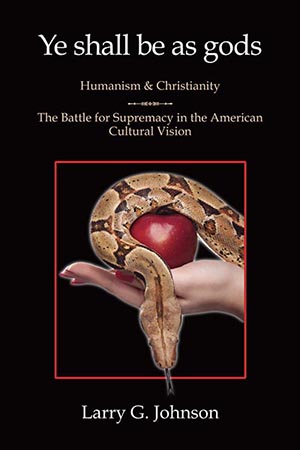
…the overarching moral suasion (influence or persuasion) of Christian principles under which our nation was founded made possible religious freedom for all faiths. Such moral suasion of Christian principles is not coercive as humanists would have us believe. The moral suasion of Christian principles provided the nation with a central vision and resulted in stability and unity by working through the individual as he voluntarily chooses the manner in which he orders his soul. [Johnson, Ye shall be as gods, p. 224.]

As a result of the over-arching Christian worldview, the nation exhibited an exceptionally strong religious sanction at its founding. This religious sanction was the power of Christian teaching over private conscience that made possible American democratic society. The religious sanction resulted because colonial and founding-era Americans held the biblical worldview and were significantly involved in government and politics. To confirm the existence of this strong religious sanction that still held sway over the nation forty years after the Constitutional Convention, we look to the words of Alexis De Tocqueville’s 1831 Democracy in America, one of the most influential political texts ever written about America.

Americans so completely identify the spirit of Christianity with freedom in their minds that it is almost impossible to get them to conceive the one without the other…

On my arrival in the United States, it was the religious atmosphere which first struck me. As I extended my stay, I could observe the political consequences which flowed from this novel situation.

In France I had seen the spirit of religion moving in the opposite direction to that of the spirit of freedom. In America, I found them intimately linked together in joint reign over the same land.

Tocqueville went on to say that the peaceful influence exercised by religion over the nation was due to separation of church and state. Unlike the modernists’ separation of church and state, Tocqueville’s separation was a separation of the spheres of power and not a separation of government from ethics and moral guidance supplied by the moral suasion of Christianity.

In twenty-first century America, the Christians’ role in politics and government should be the same as the role played by Christians in the founding of America. They were significantly involved in government, politics, and law such that the power of Christian teaching over private conscience made possible American democratic society. To restore the biblical worldview as the basis for governing the nation, Christians must become significantly more involved in government and politics, and it must happen now before it is too late.

Larry G. Johnson

Sources:
Noah Webster, “Politics,” American Dictionary of the English Language 1828, Facsimile Edition, (San Francisco, California: Foundation for American Christian Education, 1995).
Joseph Story, Commentaries on the Constitution of the United States, (Boston: Hilliard, Gray, & Co., 1833). Vol. III, p. 728, paragraph 1871.

Wayne Gruden, “Why Christians should seek to influence the government for good.” Booklet adapted from Wayne Gruden, Politics – According to the Bible – A Comprehensive Resource for Understanding Modern Political Issues in Light of Scripture, (Grand Rapids, Michigan: Zondervan, 2010).

Larry G. Johnson, Ye shall be as gods – Humanism and Christianity – The Battle for Supremacy in the American Cultural Vision, (Owasso, Oklahoma: Anvil House Publishers, 2011), p. 224.

Alexis De Tocqueville, Democracy in America, Gerald E. Bevan, Trans., (London, England: Penguin Books, 2003), pp. 343, 345.

Government is not the problem, however…

Recently, President Obama addressed the graduating class of Ohio State University. During his address he said:

Unfortunately, you’ve grown up hearing voices that incessantly warn of government as nothing more than some separate, sinister entity that’s at the root of all our problems; some of these same voices also doing their best to gum up the works. They’ll warn that tyranny is always lurking just around the corner. You should reject these voices. Because what they suggest is that our brave and creative and unique experiment in self-rule is somehow just a sham with which we can’t be trusted.

In this politically-charged national debate, we have President Obama and much of the left arguing for a greater role of government in the lives of people, and on the right the Tea Party and others are arguing for a smaller government. But, government is merely a framework for governing and not the actual science of government which determines its size and reach. We call the science of government politics.

Look in any modern dictionary and you will find the definition of politics given in a half-dozen or more explanations, many with unfavorable connotations. One pushes the dictionary aside with the thought that the soup contains the ingredients but not the flavor. To find the flavor, particularly to understand what the founding Americans thought of politics, we need to go back to Noah Webster’s American Dictionary of the English Language of 1828:

The science of government; that part of ethics which consists in the regulation and government of a nation or state, for the preservation of its safety, peace, and prosperity; comprehending the defense of its existence and rights against foreign control or conquest … and the protection of its citizens in their rights, with the preservation and improvement of their morals. (emphasis added)

We see that the early Americans believed that politics dealt with ethics (the moral code) and was to be concerned with the preservation and improvement of the morals of the citizenry. So politics is not the “heavy” as it is so often portrayed in modern times. Politics are necessary to govern a people, but that governance can range between being very good and very bad. And bad politics can result in a bloated, socialistic government or an austere, aloof, uncaring government. This distinction between government and politics is important and not just an exercise in academic hair-splitting.

With this understanding, two observations are necessary: government is ordained by God and man has a fallen nature. The problem is not bad government but bad politics caused by corruptible man who is not guided by the North Star of a biblical worldview resting on objective truth. Therefore, it is not government that is the issue as portrayed by President Obama. Rather, it is bad politics that is that separate, sinister entity that is the root of our problems. Bad politics is the tyranny that constantly lurks around the corner.

Once again, bad politics comes from ignoring the corruptible nature of man in the governance of a people. The Founders held a biblical worldview. They understood the truth of the fallen, corrupt nature of man, and designed the Constitution with separation of powers and other devices to control or mitigate that corrupt nature. But the modern liberals believe that man is inherently good, not fallen and in need of redemption.

The contrast between the beliefs of the Founders and those of President Obama and the humanist-liberal-progressive establishment could not be clearer. James Wilson, a signor of the Declaration of Independence and the Constitution and an original Justice on the U.S. Supreme Court, said, “Human law must rest its authority ultimately upon the authority of that law which is divine… Far from being rivals or enemies, religion and law are twin sisters, friends, and mutual assistants. Indeed, these two sciences run into each other.”

However, President Obama in a speech titled “Our Future and Vision for America”, said,

At some fundamental level, religion does not allow for compromise. It’s the art of the impossible. If God has spoken, then followers are expected to live up to God’s edicts, regardless of the consequences. To base one’s life on such uncompromising commitments may be sublime, but to base our policy making on such commitments would be a dangerous thing.

For President Obama, it appears that human law must exclude divine law in the nation’s policy making. President Obama also says that we should reject those voices who say that “…our brave and creative and unique experiment in self-rule is somehow just a sham with which we can’t be trusted.” I would submit that self-rule without the restraints of God’s law is the truly dangerous thing which can’t be trusted. Ultimately, self-rule without God is the source of bad politics.

Although the state has a proper role in God’s design of social systems, bad politics have allowed the state to dramatically usurp the authority of other spheres within God’s social system: family, church, labor and economics, education, man, and God Himself. In America, God and Christianity are being driven from the public square. As the social order is swept clean of God’s presence and influence, the lines between the spheres have blurred and opened the way for the state to appropriate to itself a presumed authority over all aspects of life. Such state authority ends in the tyranny of socialism or one of its various mutations which have been responsible for the greatest death, destruction, and misery in the history of the world. This is the sinister tyranny that Americans fear and which President Obama so blithely dismisses.

Larry G. Johnson

Sources:

Washington Wire, “Transcript: Obama speech at Ohio State University,” The Wall Street Journal, May 16, 2013. http://blogs.wsj.com/washwire/2013/05/06/transcript-obamas-commencement-speech-at-ohio-state/ (accessed May 16, 2013).

Noah Webster, “Politics,” American Dictionary of the English Language, Facsimile Edition, (San Francisco, California: Foundation for American Christian Education, 1995).

The Works of James Wilson, Bird Wilson, editor (Philadelphia: Bronson and Chauncey, 1804), Vol. I, pp. 104-106 as quoted from online source: http://www.partyof1776.net/p1776/fathers/WilsonJames/quotes.html (accessed May 16, 2013).

Illinois State Senator Barak Obama, “Our Future and Vision for America”, About.com US Liberal Politics, June 28, 2006. http://usliberals.about.com/od/faithinpubliclife/a/ObamaReligion_4.htm (accessed May 16, 2013).

Death of the American Constitution

A constitution will die if it does not fulfill the purpose for which it was enacted. Not being a living thing, its death takes the form of being ignored, trivialized, or corrupted. The purpose of any constitution is to reflect a set of fundamental principles by which to govern rational and social beings, that is, people. A constitution in a free society is a blueprint for constructing a government fitted to the people’s temper of mind, affections, or passions which I shall call the nation’s central cultural vision or collective worldview. Thus, we have three elements: the people, their central cultural vision, and their constitutional blueprint.

If a constitution is not functioning as intended, one of three things has happened or is happening. First, the constitution as drawn did not reflect the fundamental principles of the people. Second, the fundamental principles of that people changed over a period of time and now stand in contradiction to the principles upon which the constitutional blueprint was originally drawn. Third, the leaders of a society through craftiness and corruption have undermined the intent of the constitution in a manner contrary to the central cultural vision of the people.

The power of the American Constitution to provide prescriptive rules, principles, and ordinances for the American people is waning. Something is amiss, and to determine which of the above reasons is the source of the decline, we must examine our history.

The central cultural vision held by the colonists down through the Founding era was the basis for the set of blueprints for building the American form and practice of government, our national house so to speak. Those blueprints had been drawn largely from the Judeo-Christian tradition and its reliance on a transcendent God, His eternal truths, and His revelation to the Hebrews and first century Christians. To these central elements were added the prescriptions of history, custom, convention, and tradition—in essence, our patrimony. After a number of years certain wings of the house were demolished (e.g., slavery) and rebuilt to better adhere to those original blueprints.

Most of the governance of the house in the intervening years since its construction dealt with routine maintenance, interior decorations, and arrangement of furniture within. But the house was of sound construction, and apart from occasional errors in modification which were readily corrected, the structure served its inhabitants well. The house was large and had many rooms, and many were welcomed to live therein, even those that did not like the architecture and the central vision of its culture—the over-arching banner of the Judeo-Christian worldview.

However, the Founders knew of the fallen nature of man and foresaw a time when men would attempt to change that which they had built on timeless truths. In their great wisdom, the Founders believed they should insure what they had built would not be changed capriciously by its inhabitants. So they drew the Constitutional blueprint to limit those changes so the house would continue to function within the time-tested guidelines, or as Thomas Jefferson said, to “…bind him down with the chains of the Constitution.”

True to the Founders’ prediction, several groups believed that the house should not be just maintained or periodically redecorated but be reconstructed in its entirety. They wished to tear down the structure and build a new house using a set of old blueprints based on the tenets of humanism (which the Founders had judged to be fundamentally flawed and structurally unsound).

For the humanists, the center of the cultural vision would have to be shifted, and the old overarching banner of the Judeo-Christian worldview would have to go. Their demolition efforts began in earnest in the nineteenth century and progressed rapidly throughout the twentieth century. The structural supports of the old house were identified as the first to be demolished—belief in a transcendent God, hierarchy, moral truths, right and wrong, the fallen nature of man, and the sanctity of life to name just a few.

However, the chains of the Founders’ Constitution slowed the humanists’ progress. So they took the Founders’ words and invented new definitions and meanings to attach to those words. Once the new meanings were defined, taught in our schools, and embedded in our media-saturated consciousness, the humanists insisted that the old Constitution was outdated and must be modified and modernized to fit the new progressive understanding of the world and its problems. The old structure still stands, but for how long we do not know. Its future depends on its inhabitants. In spite of humanist assaults, the great majority of the inhabitants still like the original plans but seem to not know how (or care enough to rise from their lethargy) to stop the demolition and rebuild the house as it once was.

Our analysis leads us to conclude that the decline of the American Constitution is primarily due to the third reason listed above—the leaders of the institutions of American life through craftiness or corruption over several decades have undermined the Constitution’s original intent which they now deem to be contrary to the central cultural vision of the people. But, there is also collateral damage from the humanist assault. Because of the unrelenting assault on the biblical worldview for three generations and a lack of truthful teaching in our schools about our Founding, America is seeing a shift by a growing segment of its citizens to a humanistic worldview devoid of belief in a transcendent God, objective truth, and the fallen nature of man. The consequences of such a shift in the American vision were foreseen by our Founding fathers.

“The only foundation for…a republic is to be laid in religion. Without this there can be no virtue, and without virtue there can be no liberty, and liberty is the object and life of all republican governments.” [Benjamin Rush – Signor of the Declaration of Independence, attendee at the Continental Congress, physician and first Surgeon General]

“Without morals, a republic cannot subsist any length of time; they therefore who are decrying the Christian religion…are undermining the solid foundation of morals, the best security for the duration of free governments.” [Charles Carroll – Signor of the Declaration of Independence, lawyer, member of the Continental Congress and first U.S. Senate]

“We have no government armed in power capable of contending in human passions unbridled by morality and religion…Our Constitution was made only for a moral and religious people. It is wholly inadequate to the government of any other.” [John Adams – One of the drafters and a signor of the Declaration of Independence, 2nd President of the United States]

We have only to read the words of the Founders to understand why the power of the American Constitution to provide prescriptive rules, principles, and ordinances for the American people is waning. In summary, our Constitution won’t save America if it’s citizens abandon virtue, morality, and religion. Such abandonment leaves the Constitution powerless to guide the nation as it enters the turbulent waters of humanistic moral relativism. And the ultimate consequence is a loss of liberty.

Larry G. Johnson
Sources:

Larry G. Johnson, Ye shall be as gods – Humanism and Christianity – The Battle for Supremacy in the American Cultural Vision, (Owasso, Oklahoma: Anvil House Publishers, 2011), pp. 401-404.

Benjamin Rush, Essays, Literary, Moral & Philosophical, (Philadelphia: Thomas and Samuel F. Bradford, 1798), 93. Online source: http://fromthisconservativesviewpoint.blogspot.com/2013/01/the-only-foundation-for-republic.html (accessed May 9, 2013)

“Letter of Charles Carroll to James McHenry,” dated November 4, 1800. Bernard C. Steiner, The Life and Correspondence of James McHenry, (Cleveland: The Burrows Brothers, 1907, 475.
Online source: Quoted by Dave Miller, Ph.D., Apologetics Press http://www.apologeticspress.org/apcontent.aspx?category=7&article=1508 (accessed May 9, 2013)

John Adams, “Letter to Zabdiel Adams, Philadelphia, 21 June 1776,” in The Works of John Adams – Second President of the United States, ed. Charles Francis Adams, Vol. IX, p. 229, October 11, 1798, (Boston: Little, Brown & Co., 1854). Online Source: http://historicwords.com/american-history/john-adams/ (accessed May 9, 2013)