Rss

  • youtube

America’s malaise

Malaise seems an inadequate word to describe what’s happening in and to America. Synonyms for “malaise” are sickness, illness, disease, disorder, anxiety, depression, and discontent. It appears all are needed to describe America’s mood and condition. One magazine cover reads, “Is the world falling apart?” [1] Syndicated columnist Pat Buchanan laments the nation’s decline in a recent column titled “Things fall apart for many public institutions.” [2] He lists numerous examples of this brokenness in recent years including the Center for Disease Control’s fumbled response in protecting Americans from an Ebola epidemic; basic security breaches in protecting the president at and away from the White House; the invasion of the southern United States by 60,000 children and young people from Central America; the Obamacare rollout debacle; the federal and state response to Hurricane Katrina in which 30,000 New Orleans residents were stranded for days; the strategic blunders by the president and civilian policy makers in handling the wars in Iraq and Afghanistan; failing schools; skyrocketing national debt; deteriorating infrastructure; and political, racial, and cultural clashes. [3] And the list grows weekly.

Buchanan says that things were not always that way, and he raises the question: “What happened to us?” “Whatever happened to that can-do nation” that survived the Great Depression, armed itself and fought World War II over five years, and placed a man on the moon in ten years because we said we could do it? [4] Mr. Buchanan ends his column in dismay but offers no solutions. To Buchanan’s list we must also add the extreme societal devastation caused by the fracturing of the family structure which the late Senator Daniel Moynihan described as the he biggest change in the North Atlantic world that he observed in his forty years of government service and which happened in “an historical instant. Something that was not imaginable forty years ago had happened.” [5]

Something is profoundly wrong in America. The symptoms of the sickness are known and well-defined as shown above. The solutions put forth by politicians, bureaucrats, education professionals, scientists, sociologists and psychologists, economists and business professionals, and a host of others in the knowledge class generally treat only the symptoms with remedies that often seem to make matters worse while at the same time fail to diagnose the disease itself.

How do we determine what went wrong with America and why? To find the answer it makes sense to go back in history to a time when things were working, a time when America was unified and had confidence in the rightness of its central cultural vision? Once we find that point in time, we must ask ourselves what changed. A cursory examination of modern history in America quickly identifies that point in time as the 1960s and the emergence of the Boomer generation. What changed was a dramatic rejection by many in the Boomer generation of the values and central cultural vision of all preceding generations of Americans since their arrival as colonists in the early 1600s. A comparison of the Boomers and the Greatest Generation confirms the beginnings of America’s cultural divide.

Much has been written and said about the Greatest Generation, a term that has gained almost universal acceptance following Tom Brokaw’s book, The Greatest Generation. For it was this generation that grew up during the deprivations of the Great Depression, fought a world war, persisted in blocking Soviet threats and aggression in a prostrate post-war world, and built the world’s greatest peacetime economy. Following the Allied victory in 1945, the United States stood at the pinnacle of world power. But unlike any other time in history, that generation acted not as victors but as a good and honorable people who poured their resources and energies into helping devastated nations and their starving peoples around the world. And, they didn’t retreat in the face of new dictators and despots as they fought the hot war in Korea and the cold war in other parts of the world, primarily against the USSR and its satellites. Following World War II, they married; went to schools, colleges, and universities in record numbers; and birthed approximately eighty million children who became known as the Baby Boomers. [6]

And through all of these deprivations, challenges, and monumental efforts, “They stayed true to their values of personal responsibility, duty, honor, and faith.” [7] But, how do these values play out in twenty-first century America? Personal responsibility has been replaced by government responsibility for our health, wealth, happiness, and well-being. Duty is out of date and doesn’t resonate with the goal of self-actualization. It’s all about me, baby! Honor is no longer based on timeless standards and awarded on merit but is now a matter of personal opinion and popularity. And as to faith, the beliefs of the naïve and ignorant masses that still believe in the Christian God are tolerated as long as they do not share their faith in public nor practice that faith if it conflicts with the dictates of the state.

The challenge to the Judeo-Christian worldview by the Boomer elite is not a new occurrence. For hundreds of years a conflict has existed within Western civilization between those that believe in a transcendent God and those that do not. But, it was in the mid-twentieth century as each sphere of influence in American society began abandoning the Judeo-Christian central cultural vision under the onslaught of the purveyors of the humanistic worldview. The abandonment of the biblical foundations upon which the nation was built became evident as the leaders of the Boomer generation took the reins of leadership in the institutions of American life and imposed their humanistic values upon the policies, practices, and standards of those institutions. What are those humanistic values and beliefs held by many Boomers in leadership? There is no God and no life after death. Nature is all there is, and man is merely the evolutionary product of nature. Man can solve his own problems through science and reason. Freedom of expression and civil liberties are paramount in all areas of life. Happiness, freedom, and progress are the goals of mankind. The focus of life is on self and self-development. Society requires extensive social programs to achieve the goals of humanism. [8] It is obvious that these humanistic values have little in common with the Greatest Generation’s values of personal responsibility, duty, honor, and faith.

Arguing from the Judeo-Christian worldview held by Americans from the Founders through the Greatest Generation, Christopher Badeaux describes the provision of order supplied by that worldview and the consequences of its abandonment in favor of the humanistic worldview.

The Lord made the Universe according to a set of hidden but largely discernable rules, and those rules produce specific, predictable outcomes once the rules and variables are known. Furthermore, all things are made ordered—oriented if you prefer—to not only the Lord, but also to decent and right outcomes…Our consciences and our natural inclinations are manifestations of this intrinsic order; disregarding them gives rise to disorder. Indeed, even doing things that are right and good can be taken to extremes that place one outside of that natural order. When we step outside of that order, as anyone who has lived with someone suffering through, say, anorexia or alcohol addiction can tell you, the disorder radiates outward in a spiderweb-crack pattern of pain. [9]

The problem with the humanistic worldview is that its prescriptions fail the test of what is required for a culture to survive. First, cultural unity and cohesiveness necessary for any society to survive can never be achieved through a dictatorial center of authority required by humanism. Second, humanism is inherently a false worldview because it steps outside the order of the universe. Therefore, it cannot answer the basic questions of life by which all people seek to understand the meaning and purpose of life.

With the ascendance of the humanistic worldview in society, the spiderweb-crack pattern of disorder and dysfunction radiates through every institution of American life. This is the reason our public institutions and the institution of family is falling apart, and polls consistently show that Americans believe that society is truly disordered and falling apart. Mr. Buchanan asked what changed America. Without doubt, what changed America was the humanistic leadership of the institutions of American life that abandoned the central cultural vision of the Founding Americans and every generation up to and including the Greatest Generation. It is only when Americans return to that central cultural vision whose foundation is Christianity that disorder will become order and America will began working again.

Larry G. Johnson

Sources:

[1] “Is the World Falling Apart?” World, October 4, 2014, Cover.
[2] Patrick Buchanan, “Things fall apart for many public institutions,” Tulsa World, October 28, 2014, A-11; Pat Buchanan, “Things fall apart,”
Creators.com, October 14, 2014. http://www.creators.com/conservative/pat-buchanan/things-fall-apart.html (accessed October 29, 2014).
[3] Ibid.
[4] Ibid.
[5] William J. Bennett, The Broken Hearth, (New York: Doubleday, 2001), pp. 2, 85.
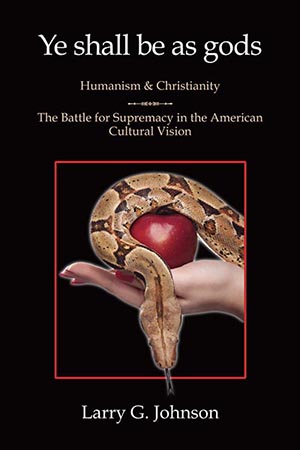
[6] Larry G. Johnson, Ye shall be as gods – Humanism and Christianity – The Battle for Supremacy in the American Cultural Vision, (Owasso, Oklahoma: Anvil House Publishers, 2011), p. 9.
[7] Tom Brokaw, The Greatest Generation, (New York: Random House, 1998), p. xx.
[8] Corliss Lamont, The Philosophy of Humanism, Eighth Edition, (Amherst, New York: Humanist Press, 1997), pp. 13-15.
[9] Christopher Badeaux, “Faith, Fear and Cormac McCarthy,” The City, Vol. 1, Issue 3, (Winter 2008), 84-85.

How we choose to deal with our sin defines our destiny

Bishop Edward J. Slattery, bishop of the Catholic Diocese of Tulsa, recently wrote of the confusion within the Catholic Church regarding its teaching on divorce, cohabitation, and people who experience same-sex attractions (“We are not defined by our sin”). He states that much of this confusion resulted from the Vatican’s October publication of a working paper (Relatio post Disceptationem) of the Extraordinary General Assembly of the Synod of Bishops on the Family whose purpose was to raise awareness of significant pastoral issues concerning divorce, cohabitation, and homosexuality. The document was designed “…to raise questions and indicate perspectives that will have to be matured.” [1] [emphasis added]

One of Bishop Slattery’s concerns is that much of the confusion results from contemporary commentators and even some in the church who use language that tends to diminish the human person through emphasis on their sinful activity. This is a legitimate concern, and as the bishop states, “…activity should never be confused with identity. The human person always remains greater than what he or she does or experiences.” [2] The Bishop is correct in that the importance of man’s identity is confirmed by the inestimable value God places on man. The tremendous value of man to God is undeniable when one considers that the cost of man’s redemption from his sinful state was the sacrifice of God’s own Son on the cross. Therefore, God does not condemn man nor can the church. But man was given freewill, and with freewill man made choices that are in conflict with God’s commandments and plan for mankind and thereby condemned himself. When this happened, it was called sin and broke the relationship between God and man. It is at this point that man often attempts to justify his activity because of his identity, and the modern church is often a co-conspirator in excusing sinful activity.

From a broader perspective, it would appear that much of the confusion in the church world stems from the church’s efforts (both Catholic and Protestant) to be inclusive of people who want to be accepted by the church but also want their sinful lifestyles to be accepted too. To do so they engage in theological contortions to answer questions and give perspective that will bring “maturity” (i.e., acceptance of the sinner and the sin within the church). It is in these efforts that the Bible is ignored even though it is the ultimate source of truth and is exceptionally clear in most cases as to God’s answers and perspective with regard to both sin and the sinner.

An example of this confusion and blurring of lines with regard to sin, the pastoral teaching of the U.S. Conference of Catholic Bishops correctly states that, “God does not love someone any less simply because he or she is homosexual. God’s love is always and everywhere offered to those who are open to receiving it.” [3] However, this truthful teaching is often perverted to mean that love is all that is necessary by those wanting the church to embrace both the sinner and his sin. To do so dismisses the admonitions of Paul to the Romans regarding homosexuality which are clear-cut and still applicable in the twenty-first century. [4] This is but one example of the great caustic of relativism seeping into the church and by which biblical truths are ignored and eroded.

To claim love is all that is necessary is to dismiss the centrality of the cross in the great meta-narrative of the Bible with regard to creation, the fall, and man’s need for redemption. Christ died for the sins of the world to obtain forgiveness for man, and every man has a choice as to whether or not he will accept that forgiveness and follow Christ. To follow Christ is to follow His commandments. But, if love is all that is necessary, then the cross becomes irrelevant, sin is a misnomer, Satan is a myth, and God does not care about how we live our lives.

Bishop Slattery rightly says, “Chastity, after all, pertains not just to our behavior but also to the state of our hearts.” [5] Acceptance of Christ is first a matter of the heart. We can’t clean up our lives before we approach Christ. Every human approaches Christ as a sinner whether he is guilty of adultery, homosexual behavior, fornication, murder, theft, or one of a thousand other sins. I am a sinner saved by grace, the unmerited favor of Christ. I have repented of my sin and have been forgiven. Not only have I repented of past sins, I have turned from my sinful ways. Homosexuals, adulterers, fornicators, and any other label the sinner wears can repent, be saved, and fellowship with God for eternity. However, to do so, they cannot stay in their sin. When the sinner accepts Christ he must put away the sin and often this “putting away” can be a difficult and continuing struggle for the new Christian. But it is the struggle to lay down one’s sin coupled with continued repentance which makes the difference, not a continuing indifference to one’s sin.

In 1937, the Confessing Church in Germany was under severe persecution from Nazi rulers and that portion of the German church aligned with Hitler. Brilliant theologian, pastor, and opponent of the Nazi regime, Dietrich Bonhoeffer wrote a dramatic paper in which he cautioned his fellow pastors in the Confessing Church.

Anyone who turns from his sinful way at the word of proclamation and repents, receives forgiveness. Anyone who perseveres in his sin receives judgment. The church cannot loose the penitent from sin without arresting and binding the impenitent in sin…The promise of grace is not to be squandered; it needs to be protected from the godless. Grace cannot be proclaimed to anyone who does not recognize or distinguish or desire it…The world upon whom grace is thrust as a bargain will grow tired of it, and it will not only trample upon the Holy, but also will tear apart those who force it on them. For its own sake, for the sake of the sinner, and for the sake of the community, the Holy is to be protected from cheap surrender. The Gospel is protected by the preaching of repentance which calls sin sin and declares the sinner guilty…The preaching of grace can only be protected by the preaching of repentance. [6]

Americans are especially averse to pain and suffering, and much of the modern church has that mindset. This is why it is difficult for some in the church to require the often painful “putting away” of sin when it welcomes the sinner into the supposed “big tent” of Christianity under the banner of love. Many in the modern church insist that the problem is not “cheap grace” but “cheap laws.” In other words, love and looking to Christ is all that matters. But grace without repentance is still cheap grace. Writing in his classic work The Cost of Discipleship, Bonhoeffer described this toxin within the church.

Cheap grace is the deadly enemy of our Church…In such a Church the world finds a cheap covering for its sins; no contrition is required, still less any real desire to be delivered from sin…Cheap grace means the justification of sin without the justification of the sinner…Cheap grace is grace without discipleship, grace without the cross, grace without Jesus Christ, living and incarnate. [7]

When we approach the cross with a contrite heart, our destiny is defined by how we respond to Christ’s invitation to be a part of His eternal kingdom. A person who willfully continues in his sin cannot be excused for they “…are [not] open to growing in virtue” and their heart remains unconverted. If the church does not make this distinction clear, it is guilty of misleading people as to their eternal destination.

Larry G. Johnson

[1] Edward J. Slattery, Bishop of Tulsa Diocese, “We are not defined by our sin,” Tulsa World, October 18, 2014, A17;
http://www.tulsaworld.com/opinion/readersforum/bishop-edward-j-slattery-we-are-not-defined-by-our/article_bb6fed60-fa34-581b-951c-5884295d6ffa.html (accessed October 20, 2014).
[2] Ibid.
[3] Gavin Newsom, et.al., Letter to Archbishop Salvatore Cordileone, June 10, 2014.
https://docs.google.com/viewer?url=http://www.sfgate.com/file/829/829-ArchbishopLetter.pdf (accessed June 23, 2014).
[4] Romans 1: 18, 24-27. RSV
[5] Slattery, A17.
[6] Eric Metaxas, Bonhoeffer, (Nashville, Tennessee: Thomas Nelson, 2010), pp. 292-293.
[7] Erwin W. Lutzer, When a Nation Forgets God,” (Chicago, Illinois: Moody Publishers, 2010), pp. 117-118.

Progressive view of American history: The good old days were all bad.

There seems to be few things that are exempt from the battlefields of the culture wars. The latest casualty is history…you know, the stuff that is learned in high school or at least what people used to learn in high school. But the history lessons taught in American schools for 200 years following the founding has been dumped by the education establishment in recent years. American history is no longer the grand story of American culture since the arrival of the first Europeans but has become a tool to promote the liberal political/cultural agenda. The nation’s history recorded by each generation’s citizens and eye-witness historians is an accurate record of America’s story. But now we have the latest two or three generations which claim the five hundred years of American history recorded by thousands of historians over the period is distorted and not reflective of the real story. Therefore, it must be trashed and replaced by a revised interpretation of history consistent with the current enlightened understanding of what really happened.

This approach to history is not new for it has been around since the early 1800s. It is called the Whig theory of history and is also known as the Progressive theory of history. This theory rests on the belief that the most advanced point in time represents the point of highest development. It assumes “…that history is an inevitable march upward into the light. In other words, step by step, the world always progresses, and this progress is inevitable.” [1] Thus, the historical record must be judged only in light of current beliefs, assumptions, and politics, all devoid of timeless truths, wisdom accumulated through the ages, tradition, and heritage. The roots of the Whig theory reach back to the humanistic concept of human perfectibility of the French philosophers which arose during the Age of Enlightenment during the eighteenth century. Known as progressivism, the theory contradicts the Christian view of man as having a fallen nature.

The progressive theory of history is alive and well in the twenty-first century halls of academia and the organizations that serve its needs. One of those organizations is the College Board whose membership is comprised of 6,000 institutions of higher education. Its mission is to expand access to higher education by helping students to achieve college readiness and college success through such programs as the SAT and the Advanced Placement Program. The organization also acts in areas of research and advocacy for the education community. [2] It is in the College Board’s new Advance Placement course in history that dramatically advances the progressive view of history and which has caused considerable concern to many including the Texas State Board of Education and the Republican National Committee as well as some of the more conservative members of the Golden, Colorado school board.

The school board wants to review the College Board’s Advanced Placement U.S. history course which they believe contains significant anti-American content. The school board proposed to establish a committee to review texts and course plans to assure the course materials were balanced and “promote more citizenship, patriotism, essentials and benefits of the free-market system, respect for authority and respect for individual rights” and “don’t encourage or condone civil disorder, social strife or disregard for the law.” [3]

Now, who could argue with teaching that promotes a good citizenship and patriotism in a well-ordered and lawful society? Well, hundreds of students, parents, and teachers are bothered by such radical ideas and have been protesting the school board’s planned review for weeks. The protesters claim the board is attempting to change the course content to suit their views (what about the views of the people that elected them?). The College Board’s Advanced Placement history course content being taught for the first time this school year “gives greater attention to the history of North American and its native people before colonization and their clashes with Europeans, but critics say it downplays the settlers’ success in establishing a new nation.” The College Board stated that the course was built “around themes like ‘politics and power’ and ‘environment and geography’.” However, what is missing from the course framework is as significant as that which is included. For example, Martin Luther King isn’t mentioned, but the Black Panthers are. The Board explained that the content was not to be considered exhaustive, but one New Jersey teacher cut to the heart of the College Board’s unspoken agenda. He argues that the course “…has a global, revisionist view” and “depicts the U.S. as going from conquering Native Americans to becoming an imperial power, while downplaying examples of cooperation and unity.” [4]

To a large extent, Americans are a people that are ignorant of their history. Because they don’t know where they came from, they are unaware of the dangers into which the dominant humanistic worldview is leading America. This was not always so, and it has occurred by design and not by accident or neglect. The teaching of history falls within the sphere of education, and education has been in the hands of progressives for a hundred years. Of all of the institutions of life in America, the educational establishment is the one that is most saturated in the humanistic worldview which stands in direct opposition to the biblical worldview upon which the nation was founded.

The founder and architect of America’s progressive education was John Dewey who was bitterly hostile to Christianity and traditional Western thought. Dewey did not believe in the existence of God, supernatural religion, and life after death. Man was an evolutionary product and nature is all there is. The only thing that mattered was human self-realization through interaction with nature. On this foundation he built the progressive theory of education which emphasizes experience, observation, social responsibility, problem solving, and fitting in to society as opposed to centuries of traditional education by which is meant the acquisition of knowledge. [5] For progressives, the historical record holds little importance as a guide to the present and future unless it is used as the “horrible example” of America’s past sins for the purpose of leading ignorant citizens to surrender their values and freedom. From this denigration of American history, we see the obvious disconnect between progressive education and the traditional understanding of that history. If one holds the progressive view of history, the views of the present generation must be superior to those of past generations and by default superior to their concepts of timeless truths, ancestral wisdom, tradition, and heritage. In this denigration of America’s past, the progressive theories of education and history support and promote the larger all-encompassing philosophy of humanism which has been described in several earlier articles.

Ashley Maher is an eighteen year old Chatfield High School senior who helped organize the protests against the Golden school board’s plan to review the content of the Advance Placement history course. She assures that, “We are going to fight until we see some results.” [6] By “results,” it must be assumed she means that the school board’s desire to promote citizenship, patriotism, the free-market system, respect for authority, respect for individual rights, civil order, national unity, and respect for the law will be duly censored from any Advance Placement American history courses in Golden’s high schools. It would be interesting to hear Ms. Maher’s response to the question as to why her values and interpretation of American history are superior and should be taught while at the same time suppressing and/or misrepresenting the factual historical record about which she knows nothing. Following that moment of silence from Ms. Maher, it is also doubtful her parents or her Boomer grandparents peopling the picket lines could give a coherent, logical answer. Should they manage some sort of response, we counter with the words and actions of those eye-witnesses to American history: the Pilgrims and Puritans; colonial farmers and frontiersmen; Washington, Adams, Jefferson, Madison, Benjamin Franklin, Patrick Henry, and the rest of the founding generations; Alexis de Tocqueville’s Democracy in America, the Abolitionists and Abraham Lincoln, the Doughboys of WWI and soldiers, sailors, and airmen of WWII, and millions of others who made America the greatest nation in the history of the world. For most modern-day Americans of the last three generations, it would be an answer they have not heard thanks to humanism’s revisionist view of American history and suppression of the historical record of our ancestors.

Larry G. Johnson

[1] Murray N. Rothbard, “The Progressive Theory of History,” Ludwig von Mises Institute, September 14, 2010. http://mises.org/daily/4708 (accessed October 28, 2014).
[2] College Board, https://www.collegeboard.org/about (accessed October 14, 2014).
[3] Colleen Slevin, “Colorado board backs review of curriculum,” Tulsa World, October 3, 2014, A9.
[4] Colleen Slevin, “Critics slam school board over history course review,” Tulsa World, October 4, 2014, A4.
[5] Larry G. Johnson, Ye shall be as gods – Humanism and Christianity – The Battle for Supremacy in the American Cultural Vision, (Owasso, Oklahoma: Anvil House Publishers, 2011), pp. 23-24, 289-290
[6] Slevin, “Critics slam school board over history course review,” A4.

The synchronization of the American church?

“This court has no jurisdiction over me, I am a German,” insisted Herman Goring as he stood with other Nazi war criminals in 1946 before an international military tribunal in Nuremburg, Germany. But Robert Jackson, chief counsel for the United States, responded that “…there was a ‘law above the law’ that stood in judgment of all men in all countries and societies.”[1] These contrasting views of the source of laws by which men should be judged continue to be at the heart of the cultural conflict in America—is the ultimate source of law to be God or man? Modern America and the American church face the same dilemma as faced by Germany and the German church of the 1930s.

We have previously quoted Eric Metaxas with regard to the dramatic changes in German life following the democratic election of Adolf Hitler on January 30, 1933. In less than two months the democratically elected Reichstag (parliament) succumbed to pressure from the Nazi political machine and placed the whole power of the government under Hitler’s control. Thus began a series of radical changes to conform all of German life to Nazi rule. Metaxas’ eloquent assessment of events bears repeating.

With the tools of democracy, democracy was murdered and lawlessness made “legal.” Raw power ruled, and its only real goal was to destroy all other powers besides itself…In the First months of Nazi rule, the speed and scope of what the Nazis intended and had begun executing throughout German society were staggering. Under what was called the Gleichschaltung (synchronization), the country would be thoroughly reordered along National Socialist lines. No one dreamed how quickly and dramatically things would change.[2] (emphasis added)

Herman Goring, the second most powerful man in Germany and founder of the Gestapo, called this dramatic reordering of society merely an “administrative change.”[3] “Everything must now be synchronized under the Fuhrer’s leadership and under the idea of Gleichschaltung—and the church must lead the way.”[4] The synchronization of the church began with a series of regulations and laws that effectively wed the church to the state and compromised the very biblical principles upon which their faith rested. These laws and regulations initially dealt with the “Jewish question” and included restrictions on Jews from serving in professions such as the law, medicine, teaching, literature, the arts, theater, and film. Christians of Jewish blood were also prohibited from serving in the ministry.[5]

Casting aside two millennia of Christian orthodoxy, the majority of the German churches willingly allowed themselves to be synchronized with the prevailing German political and social goals instead of the teachings of Jesus Christ. They wanted a strong state-oriented church, a “positive Christianity” that was “very aggressive in attacking those who didn’t agree with them and generally caused much confusion and division in the church.”[6] Eventually, the German church of the 1930s separated into three groups: the large apostate German Christian church, the Confessing church which initially opposed Hitler but became the silent church of appeasement, and a small but faithful remnant that became the uncompromising and suffering church. We see much the same divisions between churches in twenty-first century America, only the dividing factor is now centered on humanism which Dietrich Bonhoeffer called “the most severe enemy” that Christianity ever had.[7]

Bonhoeffer was a leader in in opposition to the Nazis and the German apostate church. Bonhoeffer preached that the purpose of the state was to make possible law and order as opposed to lawlessness and disorder, and it was the church’s role to “continually ask” whether the state’s actions could be justified as legitimate. But Bonhoeffer also recognized that the state could not only fail by in the provision of law and order but could also harm society with the imposition of “excessive law and order.”[8] Metaxas quotes Bonhoeffer’s indictment of the Nazi regime.

And if on the other hand, the state is creating an atmosphere of “excessive law and order,” it’s the job of the church to draw the state’s attention to that too. If the state is creating “excessive law and order,” then “the state develops its power to such an extent that it deprives Christian preaching and Christian faith…of their rights.” Bonhoeffer called this a “grotesque situation.” “The church,” he said, “must reject this encroachment of the order of the state precisely because of its better knowledge of the state and of the limitations of its action. The state which endangers the Christian proclamation negates itself.”[9]

An excess of law and order makes it difficult if not impossible for the church to question the state regarding the legitimacy of its actions. By questioning the state’s excessive laws and order imposed on its citizens, the church may violate the very laws to which it objects. The inability of the church to question the state with regard to its actions is particularly relevant to the twenty-first century American church which finds itself at the same point of decision as faced by the German Church in 1933. Here we return to our initial observation that essence of the modern struggle in America is to determine whether man’s law supersedes God’s law. Put another way, is man’s law above God’s law as implied by Herman Goring and much of the humanistic leadership in American society? Two immediate examples expose the seriousness and immediacy of the challenge to the church.

Annise Parker is the left-leaning and openly gay mayor of Houston, Texas, America’s fourth largest City. In May she imposed the Houston Equal Rights Ordinance which prohibits businesses from discriminating against gay and transgender residents. The ordinance became known as the “bathroom bill” because one of the provisions allows transgender individuals to use either a male or female public restroom facility. Opposition to the ordinance began growing during the summer as pastors and various religious leaders gathered signatures for a referendum to be placed on the November ballot which would repeal the ordinance if passed. To prevent the referendum, the city attorney subsequently rejected thousands of signatures he believed did not qualify.[10]

Under the guidance of the mayor and city attorney, both still smarting from the significant efforts of the religious community to repeal the human rights ordinance, five pastors were subpoenaed and ordered to turn over to their sermons, text messages, photographs, electronic files, calendars, and emails and virtually all communication with members of their congregations on topics such as homosexuality and gender identity. The pastors face fines and possible incarceration if they fail to do so. The obvious goal of the mayor and city attorney is intimidation. However, one pastor responded, “We’re not intimidated at all. We’re not going to yield our First Amendment rights—even if it ends in fines, confinement, or both.”[11] With opposition growing to the mayor’s effort to silence the church, Houston City Attorney Feldman remained unfazed and warned the pastors that, “The fact that you happen to be a pastor and you happen to be at a church doesn’t provide you with protection.”[12] But Texas Attorney General Greg Abbott had a different interpretation for Feldman contained in an official letter to the city, “Whether you intend it to be so or not, your action is a direct assault on the religious liberty guaranteed by the First Amendment. The people of Houston and their religious leaders must be absolutely secure in the knowledge that their religious affairs are beyond the reach of the government. Nothing short of an immediate reversal by your office will provide that security.”[13] [emphasis added]

Coeur d’Alene, Idaho, is a lot smaller (about 46,000) and a long way from America’s fourth largest city. But for the liberals and other advocates of the homosexual agenda, no place is too small to be overlooked when rooting out any perceived violation of human rights. Ministers Don and Evelyn Knapp who have been marrying couples for twenty-five years at their Hitching Post Wedding Chapel recently discovered this when the city told them that they would go straight to jail if they refused to “marry” same-sex couples (180 days in jail and fines up to $1,000 per day for every day the ministers refuse to perform the ceremony). Unlike the Colorado cake baker’s business, the Knapp’s chapel is a religious corporation. But this makes little difference to the Lesbian-Gay-Bisexual-Transgender mafia as they trample religious freedom guaranteed by the First Amendment under the guise of achieving their perverted definition of human rights.[14]

Albert Einstein was exiled from Germany because he was a Jew. Although he did not believe in a personal God, he was not an atheist. He described himself as somewhere between an agnostic and belief in a pantheistic god in which nature is the totality of everything and is identical with divinity. Yet, even though he was not a believer in Christianity, the suffering church had a profound impact on his life.

Being a lover of freedom, when the (Nazi) revolution came I looked to the universities to defend it…the universities took refuge in silence. Then I looked to the great editors of the newspapers…but they, like the universities, were silenced in a few weeks. I then addressed myself to the authors…They are, in turn, very dumb. Only the church stood squarely across the path of Hitler’s campaign for suppressing the truth. I never had any special interest in the Church before, but now I feel a great affection and admiration for it because the Church alone has had the courage and persistence to stand for intellectual truth and moral freedom. I am forced to confess that what I once despised I now praise unreservedly.[15]

As it was for the German church in 1933, it is decision time for the American church of today. We must ask ourselves: At what point do we have to become lawbreakers rather than betray our faith? The Houston pastors have given their answer.

Larry G. Johnson

Sources:

[1] Erwin W. Lutzer, When a Nation Forgets God, (Chicago, Illinois: Moody Publishers, 2010), pp. 60-61.
[2] Eric Metaxas, Bonhoeffer, (Nashville, Tennessee: Thomas Nelson, 2010), pp. 149-150.
[3] Ibid., p. 157.
[4] Ibid., p 176.
[5] Ibid., pp. 150-151, 156-157, 160.
[6] Ibid., p. 151.
[7] Ibid., p. 85.
[8] Ibid., pp. 153-154.
[9] Ibid., p. 153.
[10] Josh Sanburn, “Houston Pastors Outraged After City Subpoenas Sermons Over Transgender Bill,” Time, October 17, 2014.
http://time.com/3514166/houston-pastors-sermons-subpoenaed/ (accessed October 21, 2014).
[11] Tony Perkins, “Houstunned: Pastors Vow to Fight Mayor’s Sermon Grab,” Tony Perkins’ Washington Update, October 15, 2014. http://www.frc.org/washingtonupdate/houstunned-pastors-vow-to-fight-mayors-sermon-grab (accessed October 21, 2014).
[12] Tony Perkins, “A Subpoena for Your Thoughts…”, Tony Perkins Washington Update, October 17, 2014. http://www.frc.org/washingtonupdate/a-subpoena-for-your-thoughts (accessed October 21, 2014).
[13] Tony Perkins, “Pulpit Friction: Texas Leaders Rally to Pastors’ Defense,” Tony Perkins’ Washington Update, October 16, 2014. http://www.frcblog.com/2014/10/pulpit-friction-tx-leaders-rally-pastors-defense/ (accessed October 21, 2014).
[14] Tony Perkins, “Natural Marriage in Idaho: Give it Arrest,” Tony Perkins’ Washington Update, October 20, 2014.
http://www.frc.org/washingtonupdate/natural-marriage-in-idaho-give-it-arrest (accessed October 21, 2014).
[15] Lutzer, p. 89-90.

Connecting the dots: The homosexual agenda

For many Americans who have been clueless about the homosexual agenda and its ultimate goal for American culture, the rapidity of recent events has caused their understanding to become clearer as the relevant features of the agenda reveal the big picture. Much like connecting the dots on a child’s line art puzzle, Americans are increasingly able to connect the dots of the homosexual agenda as each event/demand/right is connected with a preceding event/demand/right until what was once a jumble of seemingly unrelated and innocuous platitudes, occurrences, demands, and actions becomes a recognizable and frightening reality.

One of the major tools for winning concessions for the homosexual agenda is the plea/demand/right for tolerance and equality as defined by humanism. The humanists would force all to bend their knees at the altar of tolerance and equality, but that altar requires bowing to the god of humanism and embracing the consequent moral relativism which provides no means for finding truth or judging something based on the concept of right and wrong. For those that fail to bow, they become the objects of intolerant harassment through restrictions on free speech (speech codes), coercion, intimidation, and loss of religious freedom.

Current examples of the sacrifice of religious freedom upon the altars of humanist tolerance are legion. One of the many is the effort to crush religious freedom at Gordon College, a 125 year old nationally ranked liberal arts Christian college with 1700 students located in Wenham, Massachusetts, just north of Boston. The college’s website states that it “…combines an exceptional education with an informed Christian faith.”[1] However, the college’s effort to fulfill its promise regarding the provision of an informed Christian faith has caused it to run afoul of the New England Association of schools and Colleges‘ Commission on Institutions of Higher Education. Gordon is being charged with potentially violating the standards of the accrediting agency because of Gordon’s longstanding policies prohibiting gay activities among students, faculty, and staff, both on and off campus and its public opposition to hiring protections for gays and lesbians. Loss of accreditation typically results in loss of U.S. Department of Education federal financial aid for students which tends to be a death knell for colleges.[2]

Commission director Barbara Brittingham states that the commission has not dealt with a case involving potential sexual orientation-related discrimination but that, “It’s a matter of looking at the information we have and deciding if the institution is meeting our standards.”[3] [emphasis added] One wonders if the commission’s standards include consideration of the U.S. Constitution’s First Amendment guarantee of religious freedom.

But that is not the end of the story. It seems that the tentacles of humanistic tolerance must reach into all levels of society to choke out perceived discrimination. The City of Salem now refuses to let Gordon use its city-owned Old Town Hall because of the college’s policies violate a municipal ordinance that prohibits Salem from contracting with entities that discriminate. The mayor of Salem was exceptionally sharp in his criticism of the college. “The clear message is that homosexuals are not worthy of employment, or even recognition of their existence, in the Gordon community. It is a slap in the face of every gay and lesbian person, particularly every gay and lesbian Christian, that says you are somehow less of a human being, you do not belong in the embrace of God’s merciful arms.”[4] Apparently, the mayor has never read the Apostle Paul’s epistle to the Romans in which God condemns homosexual behavior.

For the wrath of God is revealed from heaven against all ungodliness and wickedness of men who by their wickedness suppress the truth…Therefore, God gave them up in the lusts of their hearts to impurity, to the dishonoring of their bodies among themselves… [Romans 1:18, 24. RSV]

A planned White House executive order will bar federal contractors from discriminating in hiring on the basis of sexual orientation and include colleges such as Gordon whose students receive federal financial aid. Numerous Christian leaders have requested the President to include a religious exemption.[5] If an exemption is not allowed, Christian colleges and universities across the nation will be forced to accept students and hire teachers whose beliefs contradict the beliefs, mission, and goals of those institutions.

One Gordon graduate and subsequent employee left Gordon because he could not come out as openly gay. He subsequently formed GordonOne, an LGBT organization. He believes that Gordon’s president “has made Gordon a fortress of faith rather than a place where the doors are open to people who want to be part of a conversation about what it means to be a Christian.”[6] [emphasis added] It is apparent from this former student-employee’s comment that we must begin any conversation about what it means to be a Christian with three assumptions: the Bible is not the final authority on what it means to be Christian, the Bible’s explicit condemnation of homosexuality cannot be accepted, and the doors of Christianity are not open to homosexuals. Only after these suppositions and assumptions are accepted can the conversation begin. In other words, Gordon’s goal of providing an “informed Christian faith” is acceptable only after being sanitized by the LGBT community to meet their litmus test of tolerance and equality. To pass that test, Gordon must surrender beliefs in unchanging biblical truth and that it must accept practicing homosexuals as Christians.

Gordon is not the only one in the crosshairs of the homosexual agenda. No organization is too large or too small to be strangled by the tentacles of its intolerant agenda. We’ve heard of the woes of various cake bakers who, based on their religious beliefs, had the effrontery to refuse to bake cakes for homosexual weddings. Now we have the case of the Kentucky tee shirt decorator who refused to make tee shirts for participants in a local gay-pride parade. After two years, Lexington’s Human Rights Commission ruled that the tee shirt maker violated the city’s “fairness” ordinance and was ordered to attend “diversity training” for re-education. The commission’s Executive Director Raymond Sexton believes that Christians in the marketplace must “…leave their religion at home.” Otherwise, he warned, “you can find yourself two years down the road and you’re still involved in a legal battle because you did not do so. We’re not telling somehow how to feel with respect to religion, but the law is pretty clear that if you operate a business to the public, you need to provide your services to people regardless…”[7] [emphasis added] But the Human Rights Commission is telling someone how to feel with respect to their religion. That is the purpose of diversity training…to tell someone how they ought to feel and think.

As the dots are connected on the picture of the homosexual agenda in America, it becomes increasingly evident that it portrays the suppression and consequent eradication of Christianity from the public square in America. The first amendment to the Constitution states: “Congress shall make no law respecting an establishment of religion, or prohibiting the free exercise thereof…” Religious beliefs and feelings translate into exercise thereof, and the Constitution protects not only religious feelings and beliefs but free exercise as well. Commissioner Sexton and others promoting the homosexual agenda would prohibit both.

In light of the Constitution’s guarantee of free exercise of religion, how can the President, the New England Commission on Higher Education, the City of Salem, the City of Lexington, and a legion of others sidestep the Constitution by requiring Christians to abandon the exercise of their most deeply held religious beliefs? They cannot unless we allow them to do so. If we allow the demagogues of humanistic tolerance and equality to prevail, then the free exercise of religion will mean little more than that which can be practiced behind the closed doors of a silent church or in the muzzled confines of one’s heart. This certainly cannot be the intent of the Founders.

Larry G. Johnson

[1] Gordon College, http://www.gordon.edu/ (accessed October 8, 2013).
[2] Matt Rocheleau, “Accrediting agency to review Gordon College,” The Boston Globe, July 11, 2014.
http://www.bostonglobe.com/metro/2014/07/11/agency-review-whether-gordon-college-antigay-stance-policies-violate-accrediting-standards/Cti63s3A4cEHLGMPRQ5NyJ/story.html (accessed October 8, 2014).
[3] Ibid.
[4] Ibid.
[5] Evan Allen, “Gordon College joins request for exemption to hiring rule,” The Boston Globe, July 4, 2014.
http://www.bostonglobe.com/metro/2014/07/03/gordon-college-president-signs-letter-asking-for-religious-exemption-from-order-banning-anti-gay-discrimination/79cgrbFOuUg7lxH2rKXOgO/story.html (accessed
October 13, 2014).
[6] Ibid.
[7] Tony Perkins, “Intolerance fits liberals to a T (Shirt),” Tony Perkins’ Washington Update, October 9, 2014.
http://www.frc.org/washingtonupdate/intolerance-fits-liberals-to-a-t-shirt (accessed October 13, 2014).