Rss

  • youtube

Mainstream Environmentalism – The Dark Side – Part II

The unifying element between mainstream and radical environmentalism is the status or position of human beings in nature’s hierarchy. In Part I we noted that this unifying belief is sometimes called “deep ecology” by which is meant “a movement or a body of concepts that considers humans no more important than other species and that advocates a corresponding radical readjustment of the relationships between humans and nature.”[1] This false concept of the value of human beings has its roots in humanism, one of two worldviews contending for dominance in Western civilization and particularly America, the other worldview being Christianity.

Modern environmentalism and its humanistic worldview

This humanistic worldview offers two pillars upon which environmentalists rest their efforts. First, life is the product of a long evolutionary process of nature. Corliss Lamont was one of the twentieth century’s leading humanists and author of The Philosophy of Humanism. Lamont brings together all of the variations and branches of humanist thought under the title of naturalism.

Naturalism considers that human beings, the earth, and the unending universe of space and time are all parts of one great Nature. The whole of existence is equivalent to Nature and outside of Nature nothing exists. This metaphysics has no place for the supernatural, no room for superphysical beings or a supermaterial God, whether Christian or non-Christian in character, from whom we can obtain favors through prayer or guidance through revelation. But the adherents of Naturalism recognize and indeed rejoice in our affinity with the mighty Nature that brought us forth…[2]

It is from naturalism that springs forth the environmental movement’s current adulation of “…mighty Nature that brought us forth…” and in which we “…are all parts of one great nature.” But such beliefs require that we jettison belief in the supernatural and the specialness of man’s creation. In other words, humans are no more important than other species which requires a new view of the relationship between humans and nature which is articulated in the numerous environmental laws, regulations, and restrictions to enforce the ordinariness of humans.

The second pillar of environmentalism is that man has the ability to solve his problems through science and reason and without help from God. Modern concepts of humanism emerged from eighteenth century Enlightenment which “…promoted the belief that critical and autonomous human reason held the power to discover the truth about life and the world, and to progressively liberate humanity from the ignorance and injustices of the past.”[3] But Charles Colson has identified the singular riff in the humanist reverence for both progressivism and naturalism and has labeled them the optimistic and pessimistic sides of the same coin. With the rise of science and technology during the Industrial Revolution of the nineteenth century, humanist philosophy optimistically exalted the ability of humans to solve their problems without God. Human reason allowed man to control his own destiny.[4] However, any student of world history over the last two hundred years will agree that man’s ability to solve his problems without God has failed miserably.

So what is the humanist to do? As humanist optimism fades to pessimism that man can fix his own problems through evolutionary progressivism, the humanist overlords intercede to save man and nature from man himself. Environmentalism is once again man’s attempt to control all the variables without God or even knowing what the variables are or the impact of the unintended consequences resulting from their efforts. Man’s solutions for the environment almost invariably come at great cost of time, money, and freedom to humankind and often at great cost to the ecosystem they propose to protect. “In today’s clash between two forms of humanism, Christianity can offer a balanced alternative.[5]

Tactics of environmentalism’s activists

The early history of the Sierra Club illustrates the tension between the worldviews of biblical Christianity and humanism with regard to nature and the environment. In 1864, Abraham Lincoln had originally set aside a portion of the Sierra Nevada mountain range in northern California in a public trust under the jurisdiction of that state. Efforts by naturalist John Muir to restrain local interests and curb development of areas in and around the Yosemite Valley led to a shift of control of the area to the federal government and the establishment of Yosemite National Park. Muir’s successful efforts to bring the area under federal jurisdiction led directly to the founding of the Sierra Club in May 1892 with the expressed purpose to protect the new park. From the very beginning of the club there was a tension between utilitarian conservation as directed by Gilford Pinchot, the first director of the U.S. Forest Service, and the aesthetic preservation of Muir and the Sierra Club. This tension between the two dissimilar environmental philosophies and tactics would continue for decades.[6]

As Muir and the Sierra Club began promoting its philosophies and exerting its influence, the club’s leaders learned two important lessons for successful environmental activism: first, the need to build a broad base of membership through the establishment of chapters far from local and even state boundaries, and second, “the need to elevate local or regional preservation issues to the national agenda to overcome the entrenched political power of local interests.”[7] Over one hundred years later, we see the success of these tactics as the environmental movement has indoctrinated the federal government, academia, and science with its humanistic approach to the environment and has influenced the enactment of environmental policies and practices that fit its humanistic worldview.

Be it Smokey the Bear and fire prevention, recycling campaigns, or cleaning up trash at a local park, few elementary school rooms in America are devoid of worthwhile and reasonable instruction with regard to conserving and protecting the environment. These efforts are in agreement with the Christian worldview that we are stewards and conservators of the earth and its environment. However, these early efforts at stewardship and conservation are used by environmental activists to condition children to accept the larger and more radical message and agenda of environmental activists and their humanistic worldview. This normalization or reasonableness of what was once thought radical is a standard practice in the humanistic attack on the larger culture (e.g., acceptance of homosexuality, abortion, gay marriage, and co-habitation). This was a favorite tactic used by David Brower, the reputed father of the modern environmental movement. Brower described the increasingly radical direction of his environmental activism throughout his life.

The Sierra Club made the Nature Conservancy look reasonable. I founded Friends of the Earth to make the Sierra Club look reasonable. Then I founded Earth Island Institute to make Friends of the Earth look reasonable. Earth First! now makes us look reasonable. We’re still waiting for someone else to come along and make Earth First! look reasonable.[8]

However, when one removes the façades of many of these seemingly reasonable environmental organizations, the deep ecology dark side is revealed. And however successful the environmental movement is in promoting the supposed reasonableness of its philosophy, its deep ecology dark side remains immersed in a false and destructive worldview, and its efforts will continue to fail as it has over the last one hundred years.

Charles Colson succinctly captures the dilemma of humanists and their environmental activist cohorts as well as the solution.

The lesson is clear: Humanism in any form is not only arrogant but mistaken. We are not God and we cannot control the variables—or even foresee them. The solution to our environmental problems must be found elsewhere: in the biblical teaching that God made human beings to be stewards over creation. That means that God intended us to develop the potential in creation through industry and technology. But it also means creation is not ours to misuse for our own purposes. We are responsible to someone higher than ourselves for how we treat creation.[9]

From Colson’s observations we see the fundamental difference between the biblical prescription of stewardship and conservation and the hammer of humanistic environmentalism that devalues and controls man through worship of the creation instead of the creator.

Larry G. Johnson

Sources:

[1]“deep ecology,” Merriam-Webster. http://www.merriam-webster.com/dictionary/deep%20ecology (accessed July 7, 2014).
[2] Corliss Lamont, The Philosophy of Humanism, 8th Edition, (Amherst, New York: Humanist Press, 1997), p. 35.
[3]Christian Smith, ed., The Secular Revolution, (Berkley, California: University of California Press, 2003), p. 54.
[4]Charles Colson with Nancy R. Pearcey, A Dance with Deception, (Dallas, Texas: Word Publishing, 1993) pp. 223-224.
[5] Ibid., p. 224.
[6] Christopher J. Bosso, Environment, Inc., (Lawrence, Kansas: University Press of Kansas, 2005), pp. 23-24.
[7] Ibid., p. 24.

Mainstream Environmentalism – The Dark Side – Part I

According to his website, Finland’s Pentti Linkola is “…an ecological activist of the most serious kind: those who believe humans must set aside individual desires in order to preserve nature.”[1] The 82 year old Mr. Linkola’s eco-fascism includes extreme population control measures. His objectives and methods become clear when we read his thoughts on protecting the environment.

What to do, when a ship carrying a hundred passengers suddenly capsizes and there is only one lifeboat? When the lifeboat is full, those who hate life will try to load it with more people and sink the lot. Those who love and respect life will take the ship’s axe and sever the extra hands that cling to the sides. (emphasis added)

If the present amount of Earth’s population is preserved and is reduced only by the means of birth control, then…birth giving must be licensed. To enhance population quality, genetically or socially unfit homes will be denied offspring, so that several birth licenses can be allowed to families of quality.

In this time and this part of the world we are heedlessly hanging on democracy and parliamentary system, even though these are the most mindless and desperate experiments of the mankind…In democratic countries the destruction of nature and sum of ecological disasters has accumulated most…Our only hope lies in strong central government and uncompromising control of the individual citizen.[2]

David Brower (1914-2000) is considered as the father of the modern environmental movement and whose message has helped recruit generations of environmental activists. He was the executive director of the Sierra Club from 1952 to 1969 and whose membership increased from 7,000 to 70,000 during his tenure. Later he founded Friends of the Earth and Earth Island Institute. A three-time nominee for the Nobel Peace Prize, his accomplishments are listed as fighting dams in the Grand Canyon and Dinosaur National Park, campaigns to establish ten new national parks and seashores, and significant work in passing the Wilderness Act of 1964 which restricted usage of millions of acres of public lands.[3]

Many may object to linking Brower’s environmentalism with Linkola’s brand of eco-fascism; however, most American’s would be shocked that Brower’s beliefs are remarkably similar to Linkola’s in the callous disregard for the human element in environmentalists’ efforts to advance their ecological agenda.

While the death of young men in war is unfortunate, it is no more serious than the touching of mountains and wilderness areas by humankind.

Childbearing [should be] a punishable crime against society, unless the parents hold a government license…All potential parents [should be] required to use contraceptive chemicals, the government issuing antidotes to citizens chosen for childbearing.

Loggers losing their jobs because of Spotted Owl legislation is, in my eyes, no different than people being out of work after the furnaces of Dachau shut down.[4]

In Mr. Brower’s world, war casualties, freedom to bear children, and loggers are the equivalent of touching mountains and wilderness areas, unlicensed childbirth, and death camp executioners. It is these statements we see the similar worldviews of Brower’s mainstream and Linkola’s radical environmentalism.

Based on Linkola and Bower’s similarity of views as to the value of human beings in relation to nature, it becomes very difficult if impossible to distinguish between mainstream environmentalism depicted by Smokey the Bear and lovable dolphins as opposed to radical environmentalism. The foundation of both rests on a philosophy often called “deep ecology” which is “a movement or a body of concepts that considers humans no more important than other species and that advocates a corresponding radical readjustment of the relationships between humans and nature.”[5] In reality, the kid-friendly icons and school programs offered by the environmental movement are mere cover for the real agenda of indoctrination of children into a worldview that leads to the enslavement of humanity to the god of nature and its humanistic enforcers.

One example of environmental activists’ deep ecology that elevates nature over man is their efforts to have the federal government declare the greater sage grouse as an endangered species. The obscure chicken-sized bird is known for its mating dance. The government’s proposal will have the effect of limiting hunting, energy exploration, and ranching on 165 million acres of the bird’s habitat spread over eleven western states. This acreage is in addition to 400,000 acres that the federal government has already declared off-limits for development to protect the bird. Opponents state that the federal limits will cost between 5,000 and 31,000 jobs, but local and state efforts to protect the bird’s habitat will avoid most of the job losses. Hinting at a much wider agenda, several environmental groups say the bird is a merely a stand-in as a means of preserving a vanishing Western ecosystem.[6]

The environmental movement’s legal and regulatory demagoguery not only costs thousands of jobs but is so uncompromising in its eco-theology that it willingly sacrifices millions of taxpayer dollars to enforce its will even when their actions damage the very environment they profess to protect. One recent example is the Department of Defense and the Environmental Protection Agency agreement to end the Federal Excess Personal Property and Firefighter Property program which provides excess DOD vehicles to rural fire districts. Under the twenty-five year old program, 8,812 vehicles and pieces of equipment valued in excess of $150 million have been remanufactured and transferred to rural fire departments for use in wilderness areas. The U.S. Army stopped providing the vehicles in order to comply with a previously unenforced twenty-five year old agreement with the DOD and EPA originally aimed at the reduction of emissions for vehicles not meeting EPA standards. Rather than giving these to rural fire departments, these vehicles, ten years old or newer with fewer than 20,000 miles, will be destroyed. A spokesman for the Oklahoma Forestry services said the decision will expose those communities to increased risk of loss of life and property, and “The greenhouse gas emissions associated with the vehicles are marginal at best compared to emissions of an uncontrolled wildfire.” [7]

These are just two recent examples of a vast array of laws, regulations, and restrictions generated over decades by activist environmental movements in which American citizens are being subjugated to the whims and beliefs of radical environmentalists and their humanistic worldview. They have captured much of the nation’s political and regulatory machinery and insulated it from the will and wishes of the people.

The beliefs of environmental activists and the agendas of the organizations that support them have their roots in the humanism. In Part II, the foundational beliefs and tactics of the environmental movement will be examined in some detail.

Larry G. Johnson

Sources:

[1] Pentti Linkola,” penttilinkola.com, http://www.penttilinkola.com (accessed July 5, 2014).
[2] Ibid.
[3] “Who was David Brower?” David Brower Center. http://www.browercenter.org/about/who-was-david-brower (accessed July 5, 2014).
[4] “David Brower,” Activist Facts, https://www.activistfacts.com/person/3507-david-brower/ (accessed July 7, 2014).
[5] “deep ecology,” Merriam-Webster.com http://www.merriam-webster.com/dictionary/deep%20ecology (accessed July 7, 2014).
[6] Nicholas Riccardi, “Bird known for mating dance may decide Senate fate,” Associated Press, July 5, 2014. http://news.yahoo.com/bird-known-mating-dance-may-decide-senate-fate-124650685–election.html (accessed July 7, 2014).
[7] Rhett Morgan, “Federal deal may hit rural fire departments hard,” Tulsa World, July 5, 2014, A11.

Freedom

Fifty-six traitors to the crown signed their own death sentences and then fought to escape the hangman’s noose. So began the first steps in forming a new nation. It was a typically hot summer in Philadelphia in 1776. Day after day a group of men met to argue, pray, sweat, and wonder what would be the outcome of their deliberations. Eventually, the product of their labors was the Declaration of Independence from Great Britain. The wording of the revered document was approved on July 2nd by the Continental Congress, and on July 4th the delegates voted to accept it. What was so valuable that these men would risk their lives for it? It was freedom.

The word “freedom” is misused much as is the word “love.” Freedom’s meaning is misunderstood and has been stretched, changed, distorted, overused, cheapened, made merchandise, used to defend or promote conflicting purposes, and co-opted for support of principles and philosophies that are inherently in opposition to its real meaning.

Why is it that human beings value freedom so much? Before we can answer, we must realize that one’s worldview will ultimately define his or her understanding of the concept of freedom. If a worldview is fundamentally flawed in that it is in conflict with truth, that worldview’s concept of freedom will also be flawed and result in bondage of some type and degree. In Western civilization there are two worldviews contending for dominance—humanism and Christianity.

A Freedom that coerces

In the humanist worldview, man is encouraged to realize his own creative talents and desires and exercise maximum individual autonomy that is free from the mores, norms, tradition, and distant voices of the past. This freedom gives unbridled expression to self and senses. However, one must read the fine print in the humanists’ promises of freedom which requires individual autonomy to be consonant with social responsibility. Therefore, humanists harness an individual’s dignity, worth, and freedom to the principle of the greatest-happiness-for-the greatest-number which is hitched to the humanist belief that the highest moral obligation is to humanity as a whole. Freedom of the individual is subservient to his obligations to the larger society, and those obligations are determined and defined by the humanist intellectual elite. In other words, man replaces God as the defining authority for truth, and man’s highest moral obligation is to humanity as a whole and not to God.[1]

The source of true and lasting freedom

To understand the Christian worldview as it relates to freedom, we must examine God’s creation of man. Man was created with God’s divine image stamped upon him. Man has an insatiable thirst for freedom because God made man with freewill. It was necessary for man to have freewill in order for love to exist. God did not create man out of need. Rather, it was a will to love, an expression of the very character of God, to share the inner life of the Trinity. By creating man with a free will meant the possibility of rejection of God and His love. Being God, He knew the course and cost of His creation would be the death of His Son on the cross. In other words freewill and the potential for rejection of God was the penalty for the possibility of love. So it is on the earthly plane, to risk love is to risk rejection.[2] Love is a choice because man has freewill, and true love reflects the divine in that it focuses on relationships and not self.

Now we begin to see the fundamental differences between humanism and Christianity that shape the disparities of how those worldviews define freedom. In the Christian worldview, freedom simply means a lack of coercion but also implies self-restraint and deference to relational patterns revealed in the mores, norms, tradition, and distant voices of the past. True freedom is found only when an individual chooses a right relationship with God through the acceptance of Christ as one’s savior. In such relationship, man chooses to subordinate his own freewill to Christ, to accept Him, and to follow the road of freedom found in the revelation to the ancient Hebrews and first century Christians. From this foundation of a right relationship with God, man can find right relationships with his fellowman in family, community, and state.

In a contrary view of freedom that exalts self, humanists attempt to release the individual from the relational patterns flowing from those same mores, norms, tradition, and distant voices of the past. However, the subjugation of divinely ordered relational patterns to the god of self results in loneliness, pain, suffering, and loss in this life and eternity thereafter. In other words, true freedom is found in freely subduing one’s will to that of God’s will as opposed to the exaltation of self and the senses. Christ’s words in Luke’s gospel capture the essence of this seeming enigma.

…If any man would come after me, let him deny himself and take up his cross daily and follow me. For whoever would save his life will lose it; and whoever loses his life for my sake, he will save it. [Luke 9: 23-24. RSV]

Freedom lost

In twenty-first century America, the god of self rules the day. America’s humanist masters have taken control of the nation and its institutions. Many Americans recognize there is something amiss with the country, but they take little time to look, listen, understand, and challenge the despoiling of America’s central cultural vision upon which the nation was founded. Americans are much like Esau who sold his valuable birthright for a bowl of stew, that is, he traded what was important, godly, and honorable for temporary pleasures. America’s hard-won two-hundred-plus year birthright of freedom is being willingly and rapidly surrendered to a growing legion of humanistic overlords in exchange for a bowl of entitlements, fleeting and licentious pleasures, self-centeredness, egotism, radical egalitarianism, imaginary rights, sloth, and an obsession for life-consuming leisure activities.

Fifty-six traitors to the crown signed their own death sentences and then fought to escape the hangman’s noose. They were overwhelmingly Christian in worldview, and like God in His creation of man, the Founders knew the cost of freedom as revealed in the final words of the Declaration of Independence, “And for the support of this declaration, with a firm reliance on the Protection of Divine Providence, we mutually pledge to each other our Lives, our Fortunes, and our sacred Honor.”[3] (emphasis added)

The 56 signers of the Declaration of Independence paid a tremendous price for our freedom: 5 were arrested by the British as traitors, 12 had their homes looted and burned by the enemy, 17 lost their fortunes, 2 lost sons in the Continental Army, and 9 fought and died during the Revolutionary War.[4]

Edmund Burke’s famous observation of the eighteenth century still rings true today. “All that is necessary for the evil to triumph is for good men to do nothing.”[5] To defend America’s birthright of freedom, good and Godly men and women must once again depend on the providence of God and pledge their lives, their fortunes, and their sacred honor to subdue the humanistic apostles of self that are enslaving the nation.

Larry G. Johnson

Sources:

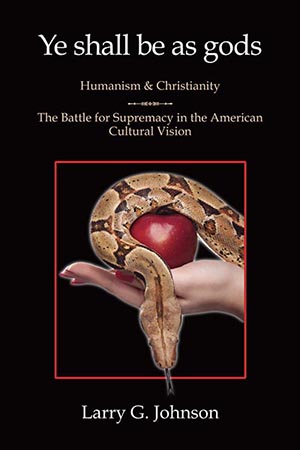
[1] Larry G. Johnson, Ye shall be as gods – Humanism and Christianity – The Battle for Supremacy in the American
Cultural Vision
, (Owasso, Oklahoma: Anvil House Publishers, 2011), p. 389.
[2] Ibid, p. 158.
[3] Henry Steele Commager, Documents of American History, (New York: F. S. Crofts & Co., 1934), p. 102.
[4] William J. Federer, America’s God and Country, (Coppell, Texas: FAME Publishing, Inc., 1996), p. 144.
[5] Ibid., p. 82.

Who are you going to believe: Nancy Pelosi or the Apostle Paul?

There is an old adage which says that a person is known by the friends he or she keeps, but a better gauge of how one is known may be to identify his or her foes. Assuming the truth of these axioms, Catholic Archbishop Salvatore Cordileone of the Archdiocese of San Francisco can easily identify his foes. The identities were revealed as signors of an open letter to the Archbishop in the June 10th edition of the San Francisco Chronicle and included California’s Lieutenant Governor Gavin Newsom and over eighty other state and local officials and community and religious leaders. The letter scolded the Archbishop for associating himself with the National Organization for Marriage (NOM) and urged him to change his plans to participate in NOM’s June 19th Washington D.C. march in support of traditional marriage.[1] In a separate letter to the Chronicle, U.S. House Minority Leader Nancy Pelosi also urged the Archbishop to skip the March for Marriage.[2]

The standard operating procedure of supporters of same-sex marriage is to attack the character of those it opposes with distortions, half-truths, and outright falsehoods which are applied liberally to people, organizations, and the veracity of the Bible. The open letter is a typical example of the liberal smear of all things not consistent with or supportive of their humanistic worldview regarding same-sex marriage. The Archbishop’s response[3] was well stated, but he has left room for additional answers to the charges and accusations raised by Pelosi and the advocates of same-sex marriage.

Do NOM’s rhetoric and actions contradict Christian beliefs?

While claiming to respect freedom of religion, the letter charged that “…the actions and rhetoric NOM, and those of the event’s speakers and sponsors, fundamentally contradict Christian belief in the fundamental dignity of all people.”[4] One must ask how the essence of the words and actions of NOM and other supporters of traditional marriage differ from the biblical admonitions of the Apostle Paul.

For the wrath of God is revealed from heaven against all ungodliness and wickedness of men who by their wickedness suppress the truth…Therefore, God gave them up in the lusts of their hearts to impurity, to the dishonoring of their bodies among themselves, because they exchanged the truth about God for a lie and worshiped and served the creature rather than the Creator, who is blessed for ever! For this reason God gave them up to dishonorable passions. Their women exchanged natural relations for unnatural, and the men likewise gave up natural relations with women and were consumed with passion for one another, men committing shameless acts with men and receiving in their own person the due penalty for their error. (emphasis added) [Romans 1: 18, 24-27. RSV]

The Apostle Paul’s words skip the smaller issue of the legitimacy of civil marriage for same-sex couples and cut to the heart of the matter by unequivocally denying the legitimacy of homosexuality altogether. If Paul was alive today and made those same statements, one wonders if Pelosi and the signers of the letter would brand the words and actions of the writer of almost half of the New Testament as fundamentally contradicting “… Christian belief in the fundamental dignity of all people”?

Is the Family Research Council a hate group?

The letter labels one of NOM’s sponsors (Family Research Council) as a hate group because of its designation as such by the Southern Poverty Law Center.[5] A review of just a few of the other organizations that the SPLC considers to be hate groups include several Catholic, Baptist, and Pentecostal organizations, the American Family Association, and the Jewish Defense League among others. The SPLC attempts to advance its credibility by also listing legitimate hate groups such as the Ku Klux Klan and the Aryan Nations.[6] The toxicity of SPLC’s vitriol is such that one its ardent followers was prompted to invade the Family Research Council’s headquarters and wound an unarmed security guard. For Pelosi and her group to cite the SPLC as a credible source to gauge the hatefulness of the Family research Council or similar organizations is absurd. The facts suggest that many (but not all) of the persons and organizations that have received the SPLC’s seal of disapproval should wear it as a badge of honor.

Does NOM attempt to punish anyone who disagrees with their position?

The letter to the Chronicle claimed that NOM’s promotional material “…uses incendiary language about those who support the freedom to marry for same-sex couples.” The letter quotes an excerpt from a NOM promotional piece.

[Their] goal is silence and punishing anyone who disagrees…This is not tolerance, it’s tyranny. You have a choice. You can remain silent in the face of oppression or you can stand up and fight for the truth…These same-sex advocates wish to silence anyone who disagrees with them.[7]

One wonders how Pelosi and the other letter signers classify the forced resignation of Mozilla CEO Brenden Eich under pressure from gay rights activists for merely contributing $1000 to Proposition 8, the California initiative that amended the state’s constitution to limit the definition of marriage as being between one man and one woman.[8] Another example is the strident opposition of the mayors of Boston and Chicago to the proposed expansion of Chic-Fil-A to their cities due to the Christian owner’s support of traditional marriage.[9] These are just two high-profile cases which suggest that there are perhaps thousands of other ordinary people who support traditional marriage across the nation who are less able to combat efforts of same-sex activists to silence and/or punish them. Contrary to the assertions of Pelosi and the signers of the letter to Archbishop Cordileone, NOM has accurately assessed the truth about the intolerance and tyranny of the supporters of same-sex marriage and their wish to silence and punish anyone who disagrees with them.

Does God’s love excuse the practicing homosexual?

Incredibly, Pelosi and the letter’s signers appear to question the Archbishop’s understanding of the Bible and pastoral teachings of the Catholic Church. They contend there is a conflict between the Archbishop’s apparent endorsement of those organizations and individuals associated with NOM and the pastoral teaching of the U.S. Conference of Catholic Bishops which states, “God does not love someone any less simply because he or she is homosexual. God’s love is always and everywhere offered to those who are open to receiving it.”[10] Thus, for Pelosi and the signers, God’s love is all that is necessary, and the admonitions of Paul to the Romans regarding homosexuality are no longer applicable in the twenty-first century.

However, to follow the prescription that love is all that is necessary is to dismiss the centrality of the cross in the great meta-narrative of the Bible with regard to creation, the fall, and man’s need for redemption. Christ died for the sins of the world, and every man has a choice as to whether or not he will accept that forgiveness and follow Christ. To follow Christ is to follow his commandments. If love is all that is necessary, then the cross becomes irrelevant, sin is a misnomer, Satan is a myth, and God does care about how we live our lives.

The Catholic bishops are correct in their pastoral teaching. God’s love never waivers for the homosexual. But homosexuals cannot stay in their sin. God is willing to accept and save people as they are, but God was not willing to leave them that way. God does not approve of homosexuality, and He will not contradict or overlook His own commandments regarding the sin of homosexuality. For a person to continue homosexual practices is to separate himself or herself from a relationship with God on this earth and for eternity.

Homosexuality is a choice. Many people may have a predilection to alcohol, criminality, or some other activity including homosexuality. But all are choices and with God’s help those tendencies can be conquered. Neither Nancy Pelosi nor any other assemblage of government, civic, and religious leaders can change those choices into a “civil right” and call it acceptable to God.

Larry G. Johnson

Sources:

[1] Gavin Newsom, et.al., Letter to Archbishop Salvatore Cordileone, June 10, 2014.
https://docs.google.com/viewer?url=http://www.sfgate.com/file/829/829-ArchbishopLetter.pdf (accessed June 23, 2014).
[2] Mark A. Kellner, “Pelosi to San Francisco archbishop: Don’t march for marriage,” Deseret News National, June 18, 2014. http://national.deseretnews.com/article/1714/Pelosi-to-San-Francisco-archbishop-Dont-march-for-marriage.html (accessed, June 23, 2014).
[3] Salvatore Cordileone, “Archbishop Cordileone March for Marriage Letter,” Archdiocese of San Francisco, June 6, 2014. http://www.sfarchdiocese.org/about-us/archbishop-cordileone/homilies-writings-and-statements/2014/Archbishop-Cordileone-March-for-Marriage-Letter-4035/ (accessed June 25, 2014).
[4] Gavin Newsom.
[5] Ibid.
[6] “Southern Poverty Law Center,” Conservapedia, http://www.conservapedia.com/Southern_Poverty_Law_Center (accessed June 23, 2014).
[7] Gavin Newsom.
[8] Joel Gehrke, “Mozilla CEO Brenden Eich forced to resign for supporting traditional marriage laws,” Washington Examiner, April 3, 2014. http://washingtonexaminer.com/mozilla-ceo-brendan-eich-forced-to-resign-for-supporting-traditional-marriage-laws/article/2546770 (accessed June 23, 2014).
[9] Michael Scherer, “Chic-Fil-A meets a First Amendment buzz saw in Chicago,” Time, July 26, 2012. http://swampland.time.com/2012/07/26/chick-fil-a-meets-a-first-amendment-buzzsaw-in-chicago/ (accessed May 21, 2014).
[10] Gavin Newsom.

This was done by ordinary people – Part IV

The role government and the role of the church as it relates to government

Dietrich Bonhoeffer went to his death on a Nazi gallows in 1945 with a very definite understanding of the role of the church in society, and his death was the eventual outcome of his living that understanding. God ordained the establishment of government for the preservation of order and the establishment of laws that define that order. The church has no right to interfere with the actions of the state in purely political matters. That said, Bonhoeffer also firmly believed the church plays a vital role in helping the state be the state by continually asking if the state’s actions can be justified as a legitimate fulfillment of its role. In other words, do the actions of the state lead to law and order and not to lawlessness and disorder? Where the state fails, it is the role of the church to draw the state’s attention to its failures. Likewise, if the state creates an atmosphere of “excessive law and order,” the church must also remind the state of its proper role. Excessive law and order becomes evident when the state’s power develops “…to such an extent that it deprives Christian preaching and Christian faith…of their rights.”[1]

Bonhoeffer demonstrated his belief of limits on state authority in his arguments to the German Lutheran church (effectively the state church) against its acceptance of the Nazi Aryan paragraph in the synchronization of all German life in accordance with Nazi dictates. The Aryan paragraph served as the basis for many laws that denied Jews their rights as German citizens.

But Bonhoeffer’s arguments regarding the German government’s treatment of the Jews really framed the larger question of “what is the church?” In other words, from where does the church receive its authority? Is it an instrument of the state and therefore subject to the state or is it apart from the state? If it is apart from the state, then what does the church do when the state oversteps the boundaries of its legitimate authority?[2]

Actions of the church with regard to government

Bonhoeffer listed three actions the church should take regarding the state. The first has been described—the church must question the state with regard to its actions and whether its actions can be justified as a legitimate concern of the state. Second, the church must “…aid victims of state action in its ordering of society…even if they (the victims) do not belong to the Christian community.” Bonhoeffer did not stop there but said a third step may be necessary. The church must “…not just bandage the victims under the wheel…but a stick must be jammed into the spokes of the wheel to stop the vehicle. It is sometimes not enough to help those crushed by the evil actions of a state; at some point the church must directly take action against the state to stop it from perpetrating evil.” But Bonhoeffer’s stick in the spokes of the wheel of state is justified only if the church’s very existence is threatened by the state and the state is no longer a state as designed by God.[3]

In Part III we identified three groups of churches in Nazi Germany of the 1930s: the apostate German Christian church, the Confessing church which became the silent church of appeasement, and a faithful remnant that became the suffering church. The great majority of German churches during the Nazi era subordinated themselves to the Nazi state, did not speak out against Nazi tyranny, and did not aid the victims crushed by the wheel of state.

We also drew disturbing parallels between the German church of the 1930s and the American church of the twenty-first century. Christianity and its values are under full-scale attack in America. The church must decide what it will or will not do in response to that attack. Some will choose to do nothing and as justification point to Paul’s letter to the Romans with regard to a Christian’s conduct in relation to the state.

Let every person be subject to the governing authorities. For there is no authority except from God, and those that exist have been instituted by God. Therefore he who resists the authorities resists what God has appointed, and those who resist will incur judgment. For rulers are not a terror to good conduct, but to bad. Would you have no fear of him who is in authority? Then do what is good, and you will receive his approval, for he is God’s servant for your good. But if you do wrong, be afraid, for he does not bear the sword in vain; he is the servant of God to execute his wrath on the wrongdoer. Therefore one must be subject, not only to avoid God’s wrath but also for the sake of conscience. [Romans 13:1-5. RSV]

But to do nothing is a misinterpretation of Paul’s message. Paul is not saying that we should be obedient to government regardless of what it does. It is nonsensical to claim that all rulers are legitimate authorities who must be mindlessly obeyed because of a misunderstanding of the meaning of Romans 13:1-5.

So how do we resolve the dilemma of whether we are to obey a specific ruler (government) or not? The issue revolves around whether or not a government is one that receives its authority from God. Christians must be subject to governing authorities if the authority is instituted by God, but Christians are not required to submit to those rulers whose authority is not instituted by God and therefore is illegitimate. The distinction becomes apparent from Paul’s words when he says that rulers are not a terror to good conduct, but to bad conduct. But we know that many rulers in this world are a terror to good conduct and therefore do not fall within Paul’s description of a government that receives its authority from God.

The church and bad government

Even where there is a bad government, Christians must be subject to governing authorities to a point. Christians are required to be subject to government laws and regulations even when they disagree with them. However, when those laws and regulations require Christians to compromise or disobey biblical commands with regard to one’s personal life or the lives over which they have been given charge, the Christian must be obedient to God’s word and not government authority. Two current examples come to mind which give meaning to this distinction. The Christian owners of Hobby Lobby have refused to provide health insurance to their employees under the Affordable Care Act because of the requirement for the inclusion of abortion services. A Christian Colorado baker refused to make a cake for a homosexual couple’s wedding. Both are laws which conflict with what it means to be a Christian who is obedient to the word of God. Christians must still be subject to the governing authorities except when their obedience conflicts with the higher laws of God.

The church and illegitimate government

There is a step beyond bad government when a government’s authority becomes illegitimate because it no longer fulfills its role in providing order and has become lawless and disorderly. Therefore, Christians must be careful to distinguish between bad government and illegitimate authorities not ordained by God. We must also realize that bad governments, through a succession of actions upon which evil is piled upon evil, will at some point forfeit their legitimacy as God withdraws His authority. At that point the ignored warnings and admonishments of the church to a state rushing head-long into lawlessness and disorder must be exchanged for sticks to be thrust into the spokes of the wheel of that illegitimate government. However, Bonhoeffer cautioned that casting sticks into the spokes of the wheel of state is justified only if the church’s very existence is threatened and the state is no longer a state upon which God’s authority rests.

The very existence of the American church is being threatened by excessive laws and the heavy hand of the government as it attempts to drive Christianity from the cultural and institutional landscape of America. The church and Christians must continue to admonish the state as to its over-reach and a possible loss of legitimacy. As the American government deprives its citizenry of their rights regarding Christian preaching and Christian faith, society will continue to slide into a cultural swamp devoid of any hint of morality. There may come a point at which God will lift His authority as the government fails to fulfill its proper role. At such a time the church must be ready with sticks to thrust into the spokes of the wheel of a lawless and chaotic government.

Larry G. Johnson

Sources:

[1] Eric Metaxas, Bonhoeffer, (Nashville, Tennessee: Thomas Nelson, 2010), p. 153.
[2] Ibid., pp. 152-153.
[3] Ibid., pp. 153-154.